
%207.svg)

.svg)

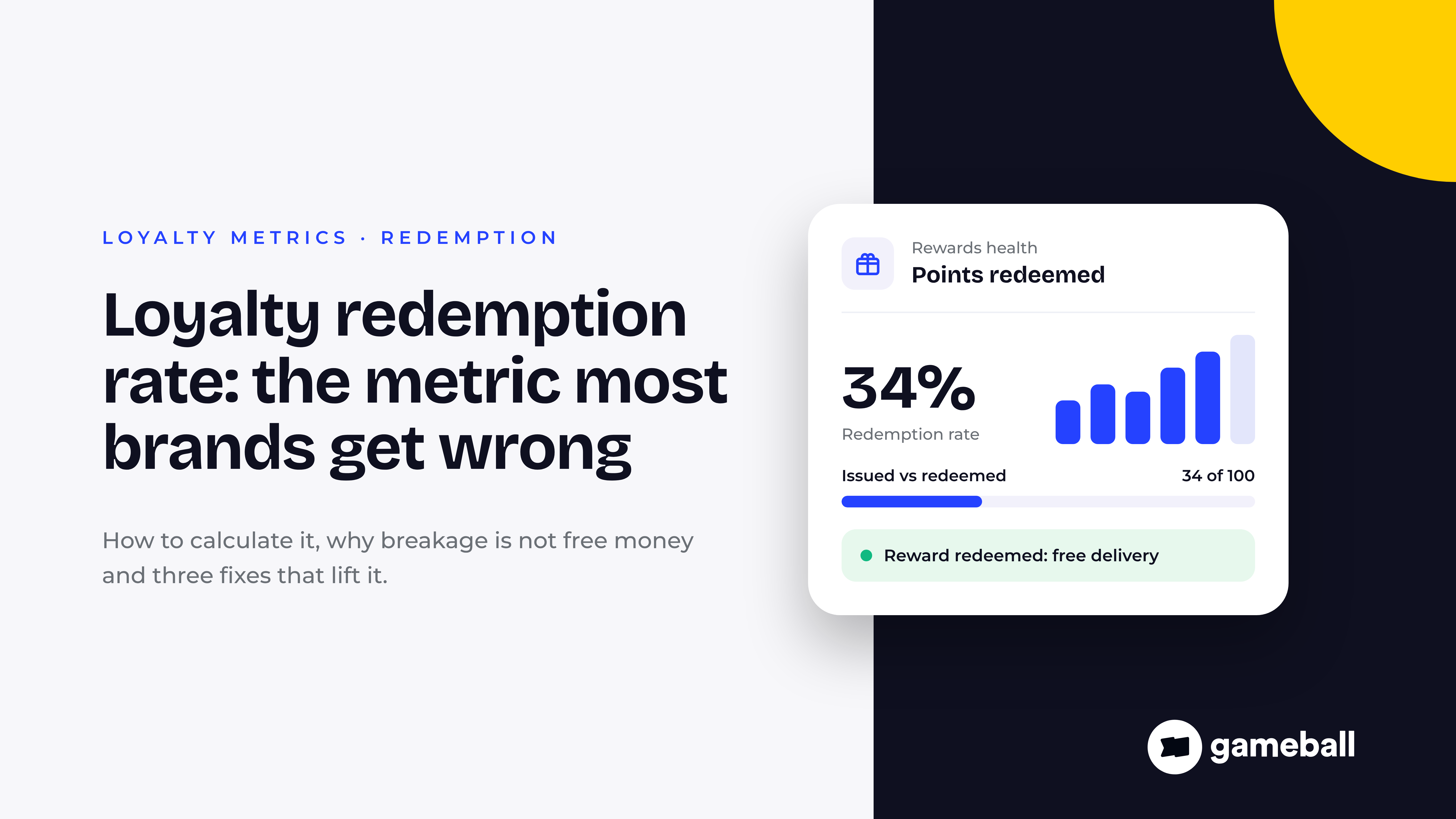
Loyalty redemption rate is the share of loyalty points or rewards a program issues that members actually spend, calculated as points redeemed divided by points issued over the same period. It is the clearest single signal of whether members see real value in your rewards, and it is the metric most brands read backwards.
Many teams treat a low redemption rate as good news, because every unredeemed point looks like a cost avoided. This guide explains why that view is wrong: what a healthy loyalty redemption rate looks like, why breakage is not free money, the liability unredeemed points create on the balance sheet, and three design changes that lift redemption without inflating reward cost.
What is a loyalty redemption rate?
A loyalty redemption rate measures how much of the value you hand out comes back as a reward claimed. Points that are issued but never claimed either sit on your books as an obligation or expire as breakage, so the redemption rate tells you how much of your loyalty spend is actually doing its job. To see where it sits next to the other numbers a program team watches, read our companion guide on how to measure loyalty program success, which maps the core metrics side by side.
The core formula is simple:
Loyalty redemption rate = points redeemed in the period / points issued in the period x 100
Measure both sides over the same window, and keep promotional bonus points in the denominator. If you exclude them, a double points weekend can make redemption look healthier than it is.
Most programs track three versions of the metric, and each answers a different question:
| Version | Formula | What it tells you |
|---|---|---|
| Points redemption rate | Points redeemed / points issued | How much of your issued value members claim. The headline number finance cares about. |
| Member redemption rate | Members who redeemed at least once / active members | How broadly the program delivers value. A few heavy redeemers can hide a silent majority. |
| Reward redemption rate | Claims of one reward / members eligible for it | Which rewards members actually want, so you can cut the ones nobody picks. |
| Time to first redemption | Days from joining to first claim | How quickly new members feel the program pay off. Long gaps predict inactivity. |
How to calculate your loyalty redemption rate
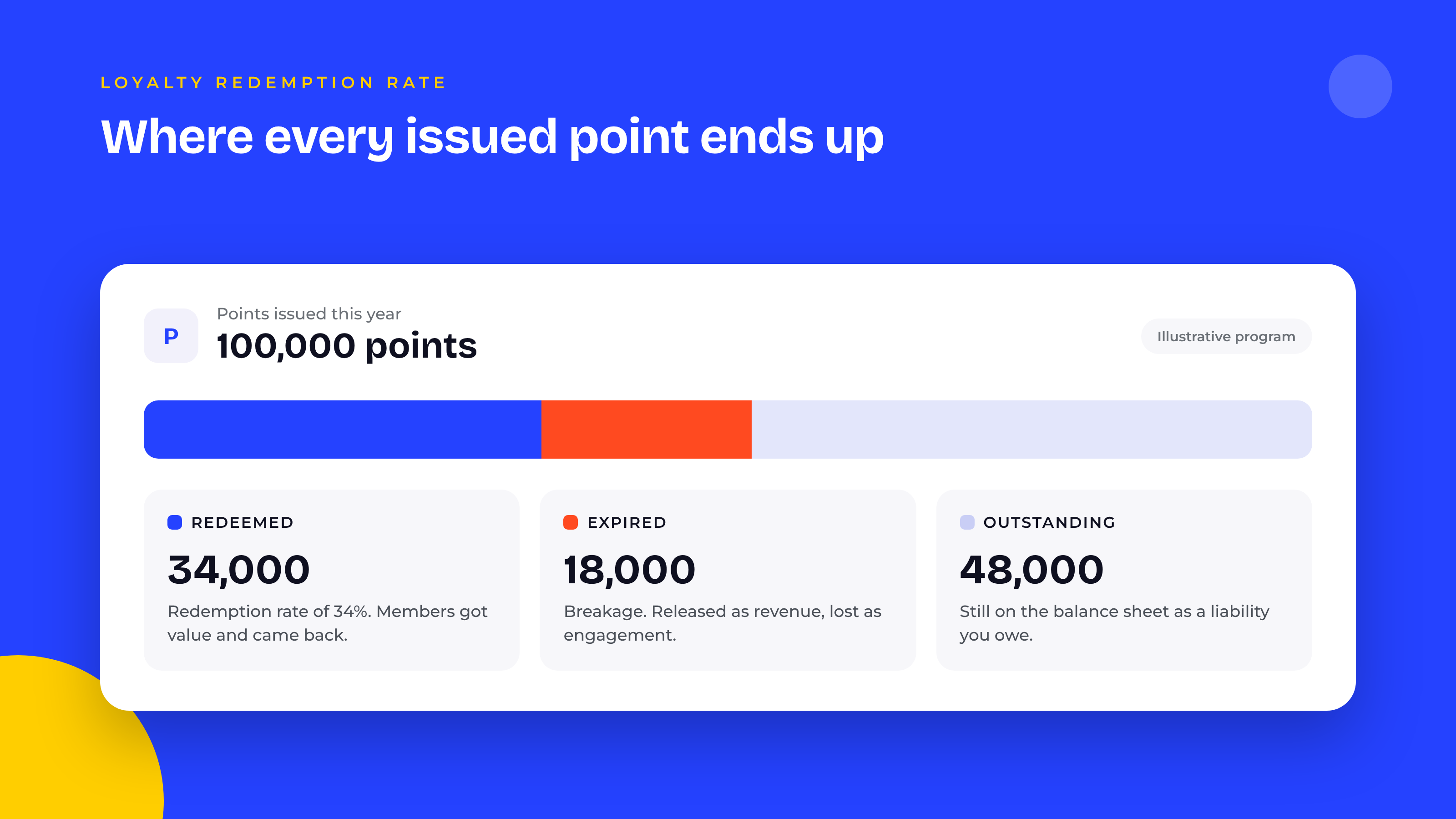
You calculate it by pulling points issued and points redeemed for the same period from your points ledger, then dividing one by the other. The four steps below keep the number honest, using an illustrative program that issued 100,000 points in a year.
- 1Fix the window
Pick a rolling 12 months. Monthly figures swing with campaigns and paydays, so trend them, but judge the program on the yearly view.
- 2Count every point issued
Include purchase points, sign-up bonuses, referral points and promotional multipliers. In our example that is 100,000 points.
- 3Count points redeemed
Only points exchanged for a reward. Expired points and points removed for returns are not redemptions. In our example, 34,000 points.
- 4Divide and segment
34,000 / 100,000 gives a 34% redemption rate. Then split it by tier, cohort and market, because the blended figure hides who is disengaging.
The segment split matters most. A 34% blended rate can be a tier of regulars redeeming constantly while new members never reach a first reward. Pair it with your repeat purchase rate to see whether the people redeeming are also the people coming back.
What is a good loyalty redemption rate benchmark?
There is no single audited redemption rate benchmark, because programs define issued points, expiry and promotional bonuses differently. What the research does agree on is direction: members who redeem are worth more, and a large share of issued value is never claimed.
In McKinsey's research on loyalty levers, members who redeem spend 25% more than enrolled but inactive members, while active members spend only 10% more. McKinsey lists unappealing or less relevant rewards and hard to reach thresholds among the causes of breakage. Bond's 2017 Loyalty Report found redeemers are twice as satisfied with a program as non-redeemers, yet more than one fifth of members had never redeemed at all. And a Colloquy study estimated US consumers earn $48 billion of loyalty value a year, with about a third, or $16 billion, going unredeemed.
So instead of chasing a universal number, read your own rate against its trend and its spread:
| What you see | What it usually means | What to check |
|---|---|---|
| Low and falling | Rewards feel out of reach or irrelevant, and members are drifting away | Cheapest reward threshold, time to first redemption, reward catalog mix |
| Stable, broad based | Members across tiers and cohorts claim value regularly | Reward cost per redemption and margin on the visits redemption drives |
| High but narrow | A small group of heavy users redeems everything, the rest are silent | Member redemption rate and the share of redemptions from your top tier |
| Very high and rising fast | Rewards may be too generous, or points are being farmed | Earn rate, cost per point, unusual redemption patterns by account |
A healthy rate is one that is steady, spread across most active members, and already priced into your reward budget. That holds in the US and in the GCC alike, although Gulf programs often run on cashback and wallet credit, where redemption tends to be more visible to members. Our look at customer retention in the GCC covers why Gulf shoppers respond to rewards they can see and spend quickly.
Why breakage is not free money
Breakage is the share of issued points that are never redeemed, and it is not free money because each expired point is a record of a member who stopped finding the program worth the effort. On paper, breakage looks like margin. In practice it is a lagging indicator of disengagement.
Whatever the cause, however, breakage represents lost business opportunities, because inactive customers are at its root.
The research on redemption behavior points the same way. A study of 3,094 loyalty members over 183 weeks by Dorotic and colleagues at BI Norwegian Business School found customers buy more often and spend more per purchase around the time they redeem, even when they redeem only part of their balance. A point that expires never triggers that lift.
Here is how the two views of breakage compare:
- ✕Expired points released into revenue
- ✕A lower reward cost line this quarter
- ✕A program that looks cheap to run
- ✓Members who no longer think rewards are reachable
- ✓Lost purchase lift around redemption
- ✓Higher churn risk among the members you paid to acquire
If unredeemed points are piling up, compare them against your customer churn rate. Rising breakage and rising churn in the same cohort is the clearest early warning a loyalty program can give you.
The liability unredeemed points create on the balance sheet
Unredeemed points are a liability because, under IFRS 15 and ASC 606, the points portion of a sale is a separate performance obligation: you defer that slice of revenue until the points are redeemed or expire. Breakage does not escape the books, it only decides how much of that deferred revenue you eventually release.
Actuarial firm Milliman sums up the estimate as loyalty program liability = cost per point x outstanding points x (1 minus the ultimate breakage rate). Its worked example, based on ASC 606 Example 52, follows an airline that sells $100 million of tickets, awards one point per $10 spent at $1 per point, and expects 90% of points to be redeemed.
Two practical consequences follow. First, a falling redemption rate does not shrink the liability straight away; outstanding points keep sitting on the balance sheet until they expire, and Milliman noted in 2021 that the loyalty liability of the three major US airlines had exceeded their operating income over the previous three years. Second, if you have been booking breakage generously and members suddenly redeem more, the liability you thought was gone comes back. That is why finance teams prefer a predictable redemption rate over a low one, and why the ROI of a loyalty program should always be calculated net of reward cost, not net of breakage.
Three design changes that lift redemption without inflating cost
You lift redemption without raising cost by making rewards easier to reach and cheaper to fulfil, not by handing out more points. These three changes do both.
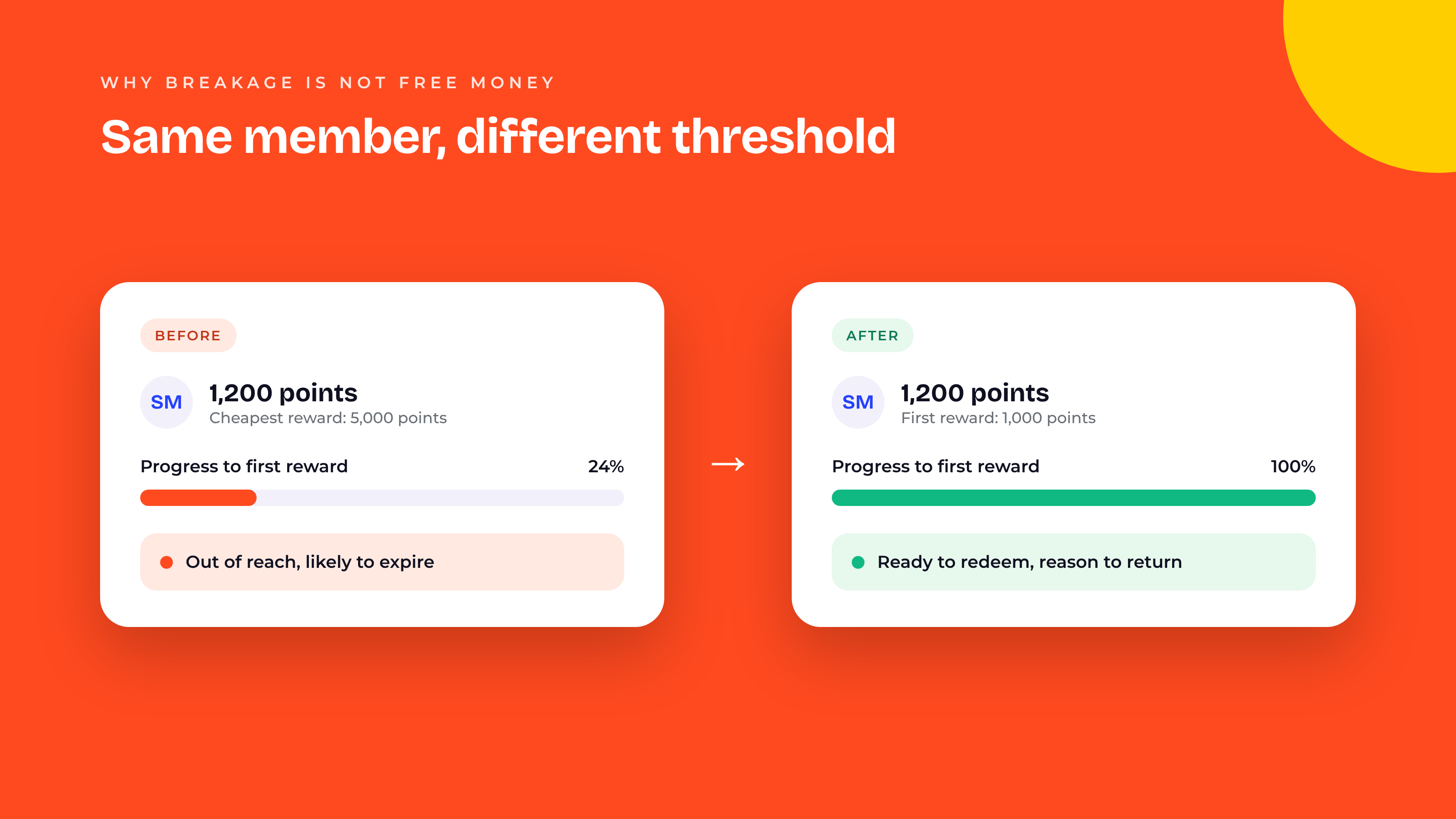
Add a small, low cost reward a new member can reach in two or three purchases. Keep the bigger rewards where they are, so the cost per point does not move.
A member who is short of a reward can top up the gap. McKinsey reports points plus cash sometimes lifts redemptions by 20 to 25 percent.
Free delivery, early access, a birthday gift or a tier perk feel generous to members but cost far less than a cash discount of the same face value.
1. Lower the first reward threshold
A major source of breakage is members who never reach a first reward. Adding an entry level reward, such as a small discount or a free add-on, closes that gap without changing the economics of the rest of the catalog. Members who redeem early learn how the program works, and the redemption effect Dorotic's team observed starts sooner. Our guide to setting up a points reward system covers how to tier a catalog so every member has something within reach.
2. Offer points plus cash
Points plus cash turns a near miss into a redemption. The member uses the balance they have and pays the difference, so you recover margin on the cash portion while the member still feels rewarded. In McKinsey's analysis, this option sometimes increases redemptions by 20 to 25 percent. It works especially well for higher value rewards in electronics, travel and fintech and wallet apps, where balances often sit just below the next threshold.
3. Rebalance the catalog toward low cost, high value rewards
Not every reward costs what it is worth to the member. Experiential perks, early access, free shipping and status benefits in a tiered loyalty program often carry a high perceived value at a low fulfilment cost. Shifting redemption toward them lifts the rate while keeping the cost per redeemed point flat or lower. You can also use gamified challenges and time limited promotions to point members at the rewards that are cheapest for you to fulfil.
What high redemption looks like in practice
Programs that design for redemption tend to report it as a headline result, because it shows members are getting real value. Two Gameball customers are good examples.
The AxisPay fintech loyalty case study shows a wallet app running redemptions at three times the market benchmark alongside a 36% increase in customer lifetime value. The Lyntel telecom case study pairs tiered cashback with a low entry reward, such as a buy two get one free offer redeemable at 17 points, and reports a redemption rate above 19%. Lyntel's low entry reward is exactly the first design change above.
How to monitor loyalty redemption rate every month
Monitoring works best as a short monthly review with finance and the loyalty owner in the same room. Use this checklist to keep it consistent:
- ✓Rolling 12 month points redemption rate, with the monthly trend
- ✓Member redemption rate by tier, cohort and market
- ✓Median days from joining to first redemption
- ✓Points due to expire in the next 30 and 90 days
- ✓Outstanding points liability agreed with finance
- ✓Top and bottom five rewards by claims and by cost
- ✓Unusual redemption spikes flagged for fraud review
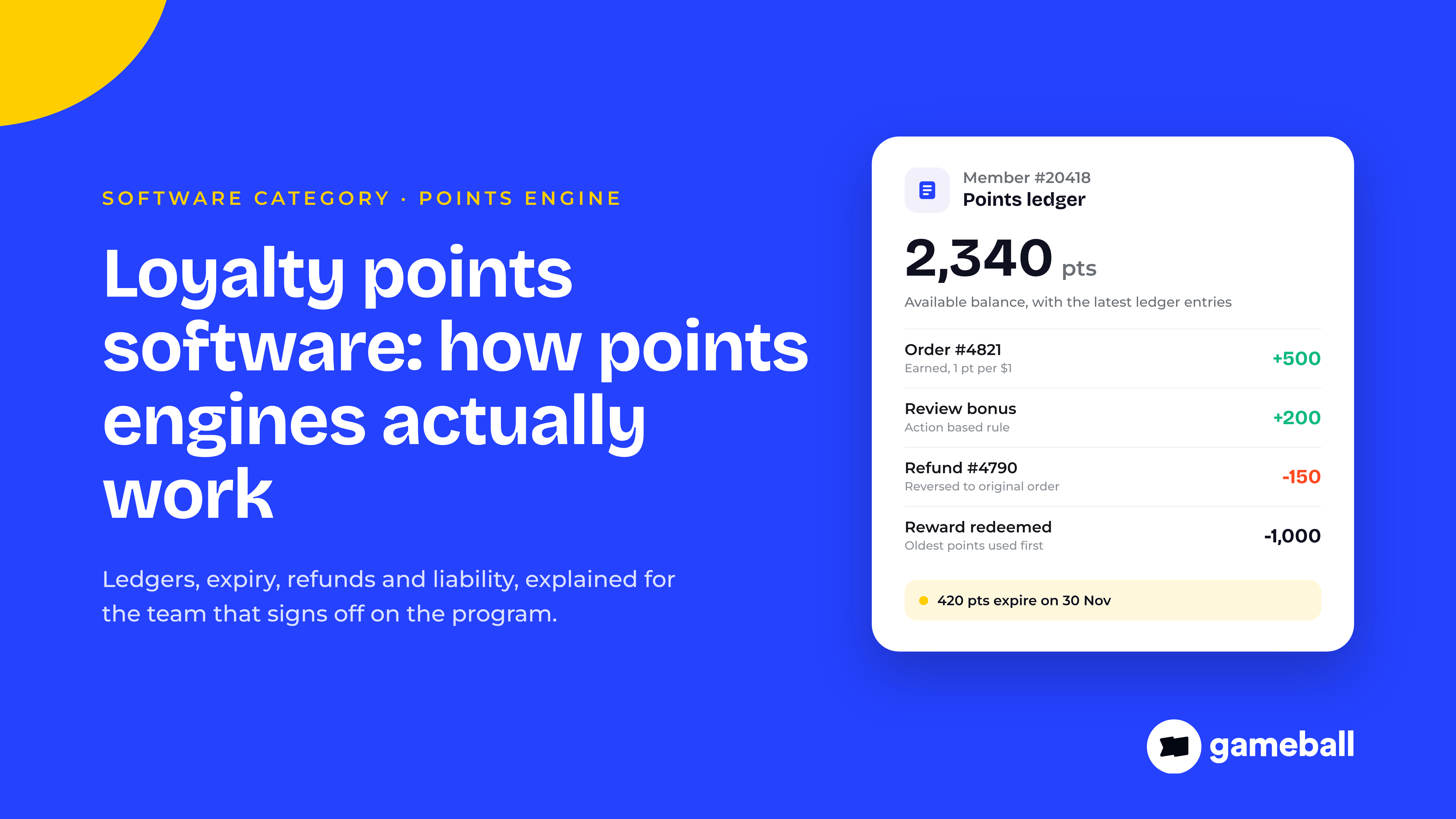
The expiry list is the most actionable line. Members with points about to expire are the easiest win you have: a reminder with the specific reward their balance unlocks turns potential breakage into a visit. Automate it with marketing automation so it runs every week, not only when someone remembers. For how points engines track issuance, expiry and liability under the hood, see our breakdown of loyalty points software.
- Loyalty redemption rate is points redeemed divided by points issued over the same period. Track the member level version too.
- There is no universal benchmark. A healthy rate is steady, broad across members and already priced into your budget.
- Breakage is not free money. It records members who stopped seeing value, and it costs you the purchase lift that comes with redemption.
- Unredeemed points are a balance sheet liability under IFRS 15 and ASC 606 until they are redeemed or expire.
- Lift redemption by lowering the first reward threshold, offering points plus cash and adding low cost, high value rewards.
How Gameball helps
Gameball's loyalty platform lets you set earn rules, tiers and a reward catalog with entry level rewards, and its analytics and intelligence dashboards track points issued, redeemed and outstanding for retail and ecommerce brands and wallet apps alike. To see how it would lift redemption in your program, book a demo or compare plans on the pricing page.
Related reads
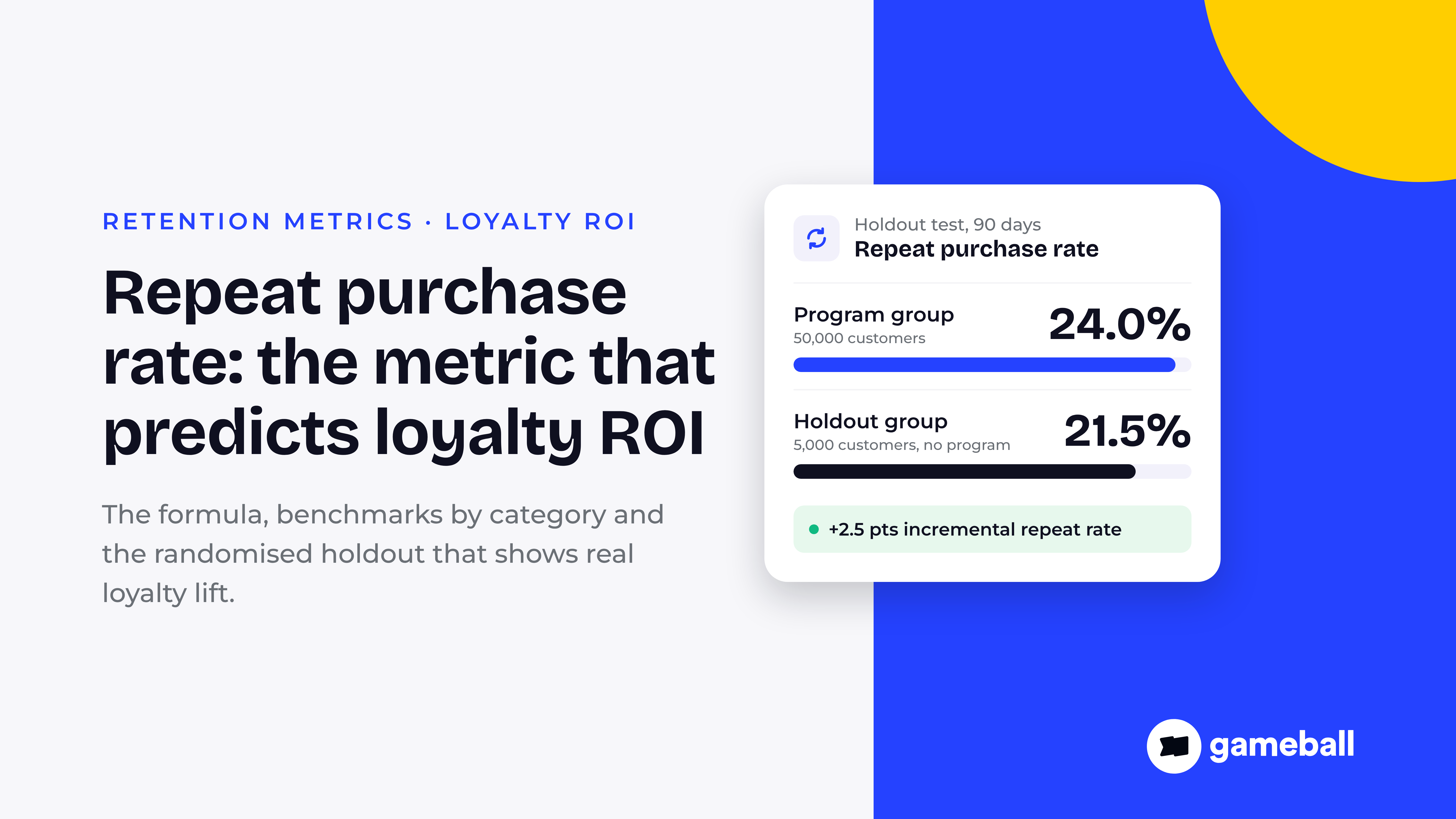
- Repeat Purchase Rate: The Metric That Predicts Loyalty ROI
- Loyalty Points Software: How Points Engines Actually Work
- How To Calculate Your Loyalty Program ROI
Frequently asked questions
What is a loyalty redemption rate?
A loyalty redemption rate is the percentage of points or rewards issued by a loyalty program that members actually redeem. You calculate it by dividing points redeemed by points issued over the same period and multiplying by 100. It shows whether members see enough value in the rewards to claim them.
What is a good redemption rate for a loyalty program?
There is no single audited benchmark, because programs count points, expiry and bonuses differently. A good redemption rate is one that is stable over time, spread across most active members rather than a few heavy users, and already priced into your reward budget. A falling rate is the warning sign to act on.
What is breakage in a loyalty program?
Breakage is the share of loyalty points that are issued but never redeemed, usually because they expire or members stop engaging. It reduces reward cost on paper, but research links it to rewards that feel irrelevant or out of reach, so high breakage usually signals disengaged members rather than a well run program.
Are unredeemed loyalty points a liability?
Yes. Under IFRS 15 and ASC 606, the value of points awarded with a purchase is treated as a separate performance obligation, so part of the sale is deferred as a liability until the points are redeemed or expire. The size of that liability depends on the cost per point and the expected redemption rate.
How can I increase my loyalty redemption rate without raising costs?
Make rewards easier to reach and cheaper to fulfil rather than issuing more points. Add a low cost entry level reward, let members combine points with cash for bigger rewards, shift the catalog toward perks such as free delivery or early access, and remind members about points that are about to expire.
Should loyalty points expire?
Expiry can make sense, because it limits the outstanding liability and gives members a reason to act. It works best when members are reminded before points expire and have a reward within reach. Expiry used mainly to boost breakage tends to frustrate members and quietly lowers the value they see in the program.
.svg)
.svg)
.svg)

Ready to level up your game?
Create your first campaign and start seeing results in 30 days.
Ready to grow?
Get in touch with our sales team today.
The loyalty vendor checklist your CTO
will thank you for
Discover engineering challenges, essentials, and more from global brands.


Gameball Staff
Stay ahead on retention
Subscribe to our newsletter and get all the latest updates as we post.

Ready to level up your game?
Create your first campaign and start seeing results in 30 days.
Read related articles

_compressed%2520(1)%2520(1).avif)
Ready to level up your customer loyalty?
Level up your customer loyalty!


.avif)
.avif)
.avif)
.avif)