
%207.svg)

.svg)

.png)
Loyalty program software in the UAE is the system that tracks what a customer buys across your stores, apps and websites, decides what that behaviour earns, and pays the reward in dirhams, in Arabic and English, and at every counter where your customer actually shops. In a market this mixed, that last part decides the shortlist more than any feature list does.
This comparison covers the platforms UAE brands really shortlist in 2026, from enterprise suites with a Dubai office to Shopify apps and point of sale add ons. It is weighted toward the categories that dominate the Emirates: multi emirate retail chains, mall based brands, hospitality, food and beverage, and fintech apps. It also covers the questions finance and legal will ask before signing: 5% VAT, currency, e-invoicing and the federal data protection law.
What is loyalty program software in the UAE?
Loyalty program software in the UAE is a points, tiers and rewards engine configured for how the Emirates buy: across seven emirates, in malls as much as online, with a large share of visitors who are not residents, and with wallets and cards doing most of the paying. The mechanics are universal. The integrations, the currency handling and the customer mix are local.
The online side alone is worth getting right. The UAE ecommerce market is valued at USD 12.30 billion in 2026 and forecast to reach USD 21.01 billion by 2031, with smartphones accounting for 78.67% of that market in 2025 and digital wallets taking the largest payment share at 43.92%. Yet most UAE loyalty programs still have to reward the in store visit too, because many of the same customers still buy in malls and restaurants.
If you are comparing across the Gulf, read this alongside our companion guide to the best loyalty program software in Saudi Arabia, which covers the Salla and Zid side of the region. The two markets share a currency peg and a love of seasonal campaigns, but their platform layers are very different.
Why the UAE shortlist looks different
The UAE shortlist looks different because the customer walks through more doors. A single fashion or electronics brand might sell through a Shopify site, a mobile app, standalone stores in three emirates and concessions inside malls that run their own coalition rewards. Majid Al Futtaim's SHARE program, for example, lets members earn and redeem points at over 5,000 stores including Mall of the Emirates, City Centre malls, Carrefour and VOX Cinemas. Any brand program you launch sits next to that.
The second difference is the visitor. Dubai welcomed 19.59 million international overnight visitors in 2025, with hotel occupancy averaging 80.7%. Hospitality, retail and F&B brands therefore serve a large group of customers who may buy once and fly home. A good UAE program rewards that first visit in a way that still has value later, through an app, a referral or a return trip, instead of assuming every member is a weekly regular.
The third difference is the business case. Acquiring a new customer is five to 25 times more expensive than retaining an existing one, and McKinsey finds that personalization most often drives a 10 to 15 percent revenue lift, with 71 percent of consumers expecting it. In a market where the same shopper is courted by several mall and bank programs at once, a flat points scheme rarely stands out. The platform has to support personalized rewards that feel specific to that customer.
Own program or coalition: the first decision
The first decision for most UAE brands is whether to run their own program, join a coalition, or do both. The software you need depends on that answer, so settle it before you book a single demo.
- Points, tiers and rewards carry your brand, not a mall's or a bank's
- Every transaction lands on your customer record, so segmentation works
- You set the earn rate, the expiry and the campaign calendar
- You pay for the software and fund the rewards yourself
- Instant access to an existing member base and a familiar currency
- Useful for footfall inside a partner mall or network
- The coalition usually owns the member relationship and much of the data
- Earn rates and rules are set centrally, so differentiation is limited
Many UAE retailers do both: they accept a coalition currency at the till for footfall and run their own loyalty program to capture the relationship. Our guide to how coalition loyalty programs work covers the partner economics in more detail. The rest of this article is about the software for your own program.
The seven criteria that decide a UAE shortlist
Score every vendor on these seven before you compare prices. Price only matters once you know which platforms can do the job in this market.
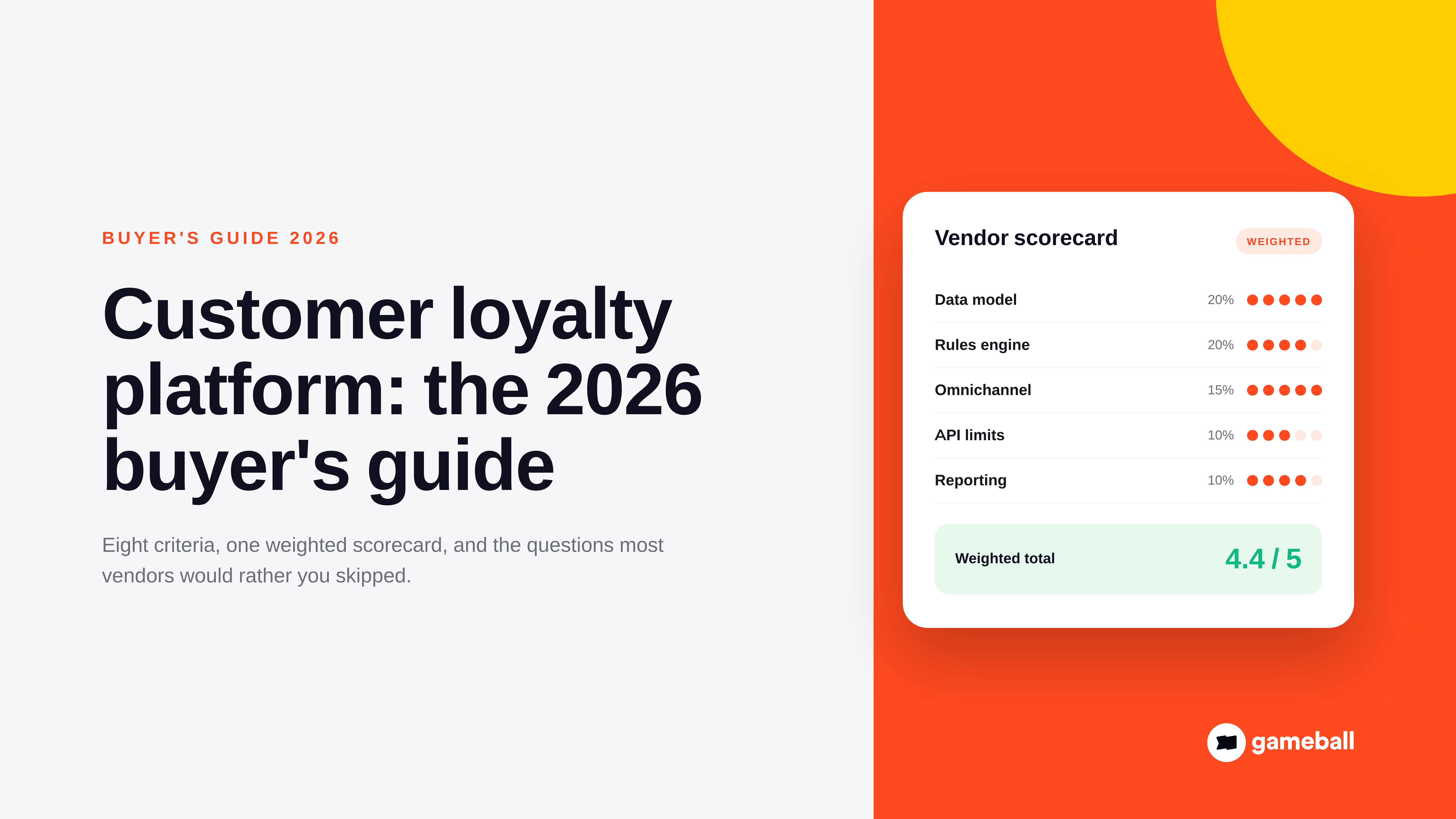
For the vendor neutral version of this exercise, with a weighted scorecard you can copy into a spreadsheet, use our 2026 customer loyalty platform buyer's guide alongside this page.
Best loyalty program software in the UAE compared
Here is how the platforms UAE brands shortlist compare on what they are built for. The categories matter more than the logos: a Shopify app, a POS add on and an enterprise suite solve different problems.
| Platform | Type | Best fit in the UAE |
|---|---|---|
| Gameball | Loyalty and gamification platform | Retail, ecommerce, fintech and on demand apps that want points, tiers, challenges and referrals on one engine across web, mobile app and point of sale |
| Capillary Technologies | Enterprise loyalty suite | Enterprise brands running very large programs, served from a Dubai office in Jumeirah Lakes Towers; Capillary cites more than 415 brands on its platform |
| XStak | Retail operating system | Retailers that want loyalty bundled with a cloud point of sale and order management on a transaction based model |
| Foodics | Restaurant point of sale | Restaurants and cafes already running Foodics in the UAE that want rewards, gift cards and loyalty inside the POS they already use |
| Rewardz | Rewards catalogue network | Banks, insurers and service brands that need a ready catalogue of more than 1,000 local and regional reward brands |
| Smile.io | Shopify loyalty app | Smaller Shopify stores that want to start with simple points and referrals at a low monthly cost |
| LoyaltyLion | Shopify loyalty app | Mid market Shopify brands that want more campaign depth than an entry level app |
| Yotpo Loyalty | Loyalty inside a retention suite | Brands already using other Yotpo products that prefer one vendor over best of breed tools |
Two patterns stand out. Shopify apps are quick to launch but stop at the edge of the website, which is a problem in a market where so much spend happens in malls and restaurants. POS and enterprise suites reach the till but can take longer to change and often offer fewer game mechanics. The short list is the set of platforms that can do both.
Gameball sits in that middle group. It installs natively on Shopify, connects to Magento and custom storefronts through a REST API and mobile SDKs, and links to point of sale and ERP systems such as Odoo, Microsoft Dynamics 365, Oracle and SAP, all listed on the Gameball integrations page. That lets one program span the channels a UAE retailer actually sells through, as our guide to building an omnichannel loyalty strategy explains step by step.
What each platform costs
Published prices show you the pricing model and whether you will be quoted or can self serve. Both shape the business case more than the headline number.
| Platform | Entry price | Pricing notes |
|---|---|---|
| Gameball | From $399 per month | Growth from $399 for businesses under 10,000 monthly rewarded customers, Enterprise from $599 above that |
| Capillary Technologies | By quote | No public price list, so budget for an enterprise sales and scoping cycle |
| XStak | Transaction based | Charged on transaction volume rather than a fixed setup or yearly fee |
| Foodics | By quote | Priced with the Foodics POS subscription on a UAE specific price list |
| Rewardz | By quote | No public price list; scope is set around the reward catalogue you need |
| Smile.io | Free | Free tier, then $15, $79 and $199 per month, Plus at $999 on annual billing and Enterprise by quote |
| LoyaltyLion | $199 per month | Classic includes 500 orders a month, Advanced and Plus are quoted |
| Yotpo Loyalty | By quote | No public loyalty price list |
Currency is less of a worry in the UAE than in many markets, because the Central Bank maintains the dirham peg against the US dollar at roughly 3.67 dirhams per dollar. A dollar priced plan will not drift the way it would against a floating currency. What still needs checking is how the vendor invoices you, how 5% VAT applies to the subscription, and whether your reward values are set in dirhams on the customer side.
Also check what you are being charged for. Order based pricing penalizes high frequency categories like coffee and grocery, while member based pricing penalizes brands with large tourist sign ups who rarely return. Model twelve months of your own volume before comparing two headline numbers, and use our guide to calculating loyalty program ROI to set the target.
How to choose based on your category
The fastest route to a decision in the UAE is to start from your category and where your customers pay, rather than from a vendor list.
The detail behind each route is covered elsewhere on the blog: the complete guide to running a restaurant loyalty program for F&B groups, fintech gamification for wallets and banking apps, and tiered loyalty programs for mall brands that need status to stand out.
Whichever route applies, bring one awkward rule to every demo. For example: triple points on one category, for gold tier members only, during the Dubai Shopping Festival, capped per order and valid in Abu Dhabi stores too. The gap between vendors shows in minutes, and it is the same gap that decides whether your Ramadan campaign is built once or rebuilt by hand every year.
What VAT, e-invoicing and data law mean for your loyalty program
A loyalty program is a customer database with a rewards layer on top, so it touches tax and data protection before it touches marketing. Three rules matter most in the UAE.
VAT. According to the Ministry of Finance, VAT was introduced across the UAE on 1 January 2018 at a standard rate of 5%. The accounting treatment of points and vouchers depends on how your program is structured, so ask your tax adviser to review how a redemption appears on the receipt before launch.
E-invoicing. Under the federal framework, businesses with revenue of AED 50 million or more must comply with e-invoicing from 1 January 2027, smaller businesses from 1 July 2027, while B2C transactions are exempt until further notice. Most consumer loyalty sits outside the first phase, but a B2B or trade rewards program may not.
Data protection. The federal Personal Data Protection Law, Federal Decree Law No. 45 of 2021, allows transfers abroad to countries with adequate protection, or under standard contractual clauses or the customer's express consent in other cases. It does not apply to free zones with their own data laws, such as the DIFC and ADGM, so a group with entities in both may be dealing with two regimes.
Treating loyalty data as a first party asset rather than a compliance burden pays off, as our piece on first party data from loyalty programs explains.
How Gameball helps
Gameball runs loyalty, gamification, referrals and promotions on one customer record, so points, tiers, challenges and referral rewards all read from the same behaviour. For retail and ecommerce brands and fintech apps in the Emirates, that means a website, an app and a till can share one balance, with reporting that shows what the program returned rather than how many points it issued.
To see it against your own catalogue and earning rules, book a demo, or check Gameball pricing if you are still sizing the business case.
Related reads
- Best Loyalty Program Software in Saudi Arabia (2026 Comparison)
- Customer Loyalty Platform: The 2026 Buyer's Guide
- Coalition Loyalty Programs: How Partner Rewards Work
Frequently asked questions
What is the best loyalty program software in the UAE?
There is no single best option, because the right choice depends on where your customers pay. Shopify only stores can start with a Shopify app, restaurants often begin inside their POS, and enterprise groups look at full suites. Brands selling online, in app and in store across several emirates need a platform that joins all of those channels.
How much does loyalty program software cost in the UAE?
Entry level Shopify apps start free or from about $15 a month, mid market platforms run from roughly $199 to $399 a month, and enterprise suites are quoted. Because the dirham is pegged to the dollar, dollar pricing stays predictable. Budget separately for the rewards themselves, which usually cost more than the software.
Should my brand join a coalition program or run its own?
Run your own if you want to own the customer data, set your own rules and build a brand relationship. Join a coalition if footfall inside a partner mall or network matters more than the data. Many UAE retailers do both, accepting a coalition currency for reach while running their own program for retention.
Does a loyalty program in the UAE need to support Arabic?
Yes. The UAE audience is multilingual, so members expect both Arabic and English across the whole journey, not just the widget. Tier names, reward descriptions, confirmation emails and the checkout message should read naturally in both languages, with correct right to left layout for Arabic.
How does UAE data protection law affect a loyalty program?
The federal Personal Data Protection Law governs how you collect, store and transfer member data. Transfers abroad need an adequate destination, standard contractual clauses or express consent. Entities in free zones with their own data laws, such as the DIFC and ADGM, follow those rules instead, so check where each part of your group is registered.
Is VAT charged on loyalty program software in the UAE?
The UAE applies VAT at a standard rate of 5%, in place since 1 January 2018. How it applies to your subscription and to points redemptions depends on the vendor's invoicing and your program design, so ask your tax adviser to review a sample receipt and a sample vendor invoice before launch.
.svg)
.svg)
.svg)

Ready to level up your game?
Create your first campaign and start seeing results in 30 days.
Ready to grow?
Get in touch with our sales team today.
The loyalty vendor checklist your CTO
will thank you for
Discover engineering challenges, essentials, and more from global brands.

Gameball Staff
Stay ahead on retention
Subscribe to our newsletter and get all the latest updates as we post.

Ready to level up your game?
Create your first campaign and start seeing results in 30 days.
Read related articles
%2520v3.png)

Ready to level up your customer loyalty?
Level up your customer loyalty!


.avif)
.avif)
.avif)
.avif)