
%207.svg)

.svg)

A customer walks in, orders their usual, and leaves. Without a loyalty program, you have no idea if they'll come back tomorrow or never again. With one, you know their name, their preferences, and exactly how to bring them back.
Restaurant loyalty programs have evolved far beyond paper punch cards. The best ones now integrate directly with your POS, personalize rewards based on behavior, and turn occasional diners into regulars who spend more per visit. This guide covers how these programs work, the different types available, and how to launch one that actually drives repeat business.
What is a restaurant loyalty program?
A restaurant loyalty program is a rewards system that gives customers points, perks, or discounts when they dine with you. The goal is straightforward: give people a reason to come back instead of trying somewhere new. Programs that work well drive customer lifetime value and visit frequency by making rewards easy to earn and redeem.
Most modern programs are digital. They connect directly to your POS system or online ordering platform, so customers earn rewards automatically when they pay. No punch cards to lose, no codes to remember. The best setups feel invisible; customers just see their points grow and their rewards unlock.
Why restaurant loyalty programs drive repeat visits and customer lifetime value
Here's the math that makes loyalty programs worth the effort: acquiring a new customer costs five to seven times more than retaining an existing one. And loyal customers tend to spend more per visit than first-timers.
Loyalty programs also help you escape the grip of third-party delivery apps. When customers order directly through your app or website to earn rewards, you keep more margin and own the relationship. That's a big deal when delivery platforms charge 15-30% per order.
- Higher visit frequency: Members come back more often to earn and use rewards
- Larger average tickets: Loyalty members typically spend more per transaction
- Lower acquisition costs: Retention is cheaper than constantly finding new customers
- First-party data: Programs capture purchase history and preferences you can act on
- Less platform dependence: Direct ordering relationships cut commission fees
The psychology behind why restaurant loyalty programs work
Good loyalty programs tap into how people actually make decisions. Understanding a few key principles helps you design something that feels rewarding rather than gimmicky.
The principle of reciprocity
When you give something first, a welcome bonus, a surprise treat, a birthday reward, people feel compelled to return the favor. A free appetizer on signup creates goodwill that often translates into future visits.
The goal-gradient effect
People speed up as they get closer to a goal. That's why progress bars showing "3 more visits until your free entree" work so well. Customers who see they're 80% of the way to a reward visit more frequently than those just starting.
Loss aversion
Losing something feels worse than gaining something of equal value. Points that expire, status levels that reset, or rewards that disappear create urgency. Customers stay engaged to protect what they've already earned.
Habit formation loops
Loyalty programs create cue-routine-reward loops. The cue might be lunchtime hunger, the routine is visiting your restaurant, and the reward is earning points. Over time, this loop becomes automatic.
Types of loyalty programs for restaurants
Different program structures work better for different restaurant types. Here's a quick comparison:
Points-based programs
Customers earn points for every dollar spent, typically 1-10 points per dollar, then redeem them for free items or discounts. The flexibility in earn and burn ratios lets you control program costs while making rewards feel attainable.
Tiered and VIP programs
Customers unlock status levels like Silver, Gold, and Platinum with escalating benefits. The exclusivity drives aspiration. People want to reach the next tier, which keeps them coming back.
Visit-based and punch-card programs
Digital versions of "buy 10, get 1 free" are simple to understand. However, they offer limited flexibility; you can't reward higher spending or specific behaviors beyond showing up.
Subscription-based programs
Customers pay a recurring fee for unlimited or discounted items. Panera's Unlimited Sip Club pioneered this model. It works best for high-frequency concepts where customers visit multiple times per week.
Cashback rewards programs
Percentage-back models credit future purchases, typically 3-10% of spend. These appeals to price-sensitive customers and feel straightforward, with no complicated point conversions.
Gamified and mission-based programs
These programs reward specific behaviors through challenges, streaks, and badges. "Try three new menu items this month" or "visit on a Tuesday" drives actions beyond simple transactions. This is where modern programs stand apart from basic points systems.
Examples of successful restaurant loyalty programs
Looking at what works for major chains reveals patterns you can adapt, regardless of your size.
Starbucks Rewards
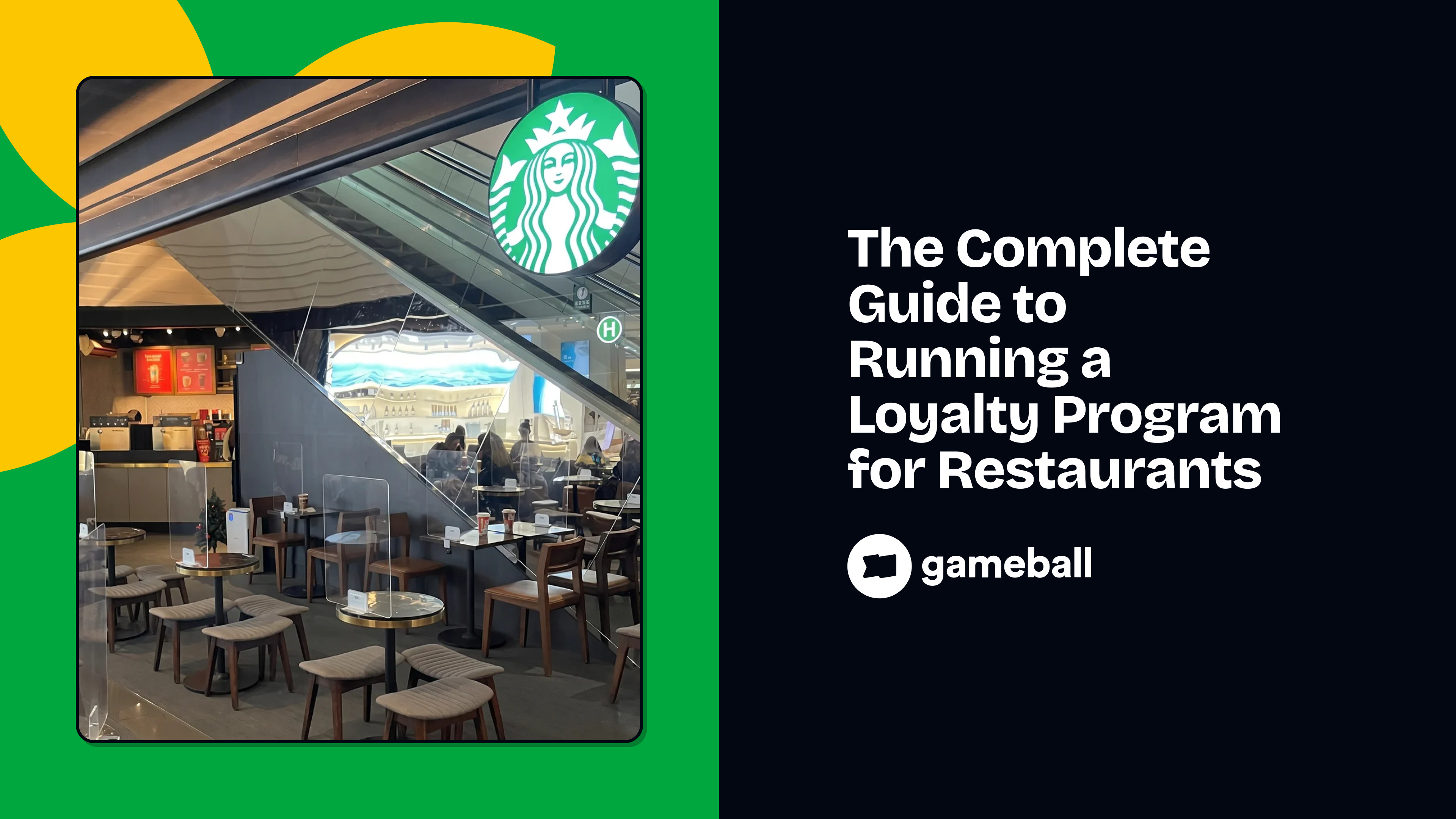
Starbucks built the gold standard for restaurant loyalty. Their tiered points system, seamless mobile ordering, and personalized offers drive over 30 million active members in the US alone. The key insight: make the app so useful that customers prefer it to paying with cash.
Chick-fil-A One
Chick-fil-A's tiered membership includes surprise-and-delight rewards that create an emotional connection.
Chipotle Rewards
Chipotle combines straightforward points with gamified "Extras" challenges. Ordering guacamole, trying new proteins, or visiting during certain windows earns bonus points. This drives menu exploration and off-peak traffic.
What successful restaurant loyalty programs have in common
Across these examples, a few patterns separate effective programs from forgettable ones:
- Seamless digital experience: Easy sign-up, mobile app integration, frictionless redemption
- Clear value proposition: Customers immediately understand what they earn and how to redeem
- Personalization: Offers tailored to individual preferences and behavior
- Omnichannel consistency: Same experience whether ordering in-store, online, or via app
- Emotional connection: Members feel recognized, not just transacted with
Features to look for in restaurant loyalty software
The right software reduces manual work and integrates with your existing systems. Here's what matters most.
POS and online ordering integration
Your loyalty program only works if it captures transactions automatically. Look for native integrations with your point-of-sale system so customers earn rewards without extra steps.
Omnichannel earning and redemption
Customers expect a unified experience across dine-in, takeout, delivery, and app orders. If someone earns points ordering delivery but can't redeem them in-store, you've created friction.
Customer data and segmentation
Loyalty platforms capture purchase history, visit frequency, and preferences. This data enables targeted campaigns, sending a "we miss you" offer to lapsed customers or a new menu item promotion to adventurous eaters.
Personalization and marketing automation
Automated triggers like birthday rewards, win-back campaigns, and expiring points alerts drive engagement without manual effort. Set them up once and let them run.
Margin protection and fraud controls
Features like redemption limits, validation rules, and refund adjustments prevent abuse. Without these controls, you risk customers gaming the system.
How to launch and promote a restaurant loyalty program
A successful launch requires preparation, staff buy-in, and sustained promotion.
1. Define your goals and reward structure
Establish what actions to reward, earn rates, and redemption options before launch. If your food cost is 30%, giving away a $10 item for $100 in spend maintains profitability.
2. Train your staff and set up POS flows
Your front-line team needs to explain the program, enroll customers, and process redemptions smoothly. Role-play common scenarios and create quick-reference guides.
3. Announce the program across every channel
Promote via in-store signage, receipts, social media, email, and your website. Create launch incentives, bonus points for early sign-ups, to build initial momentum.
4. Drive sign-ups through email and in-app messaging
Use automated messaging to convert existing customers. A simple "You've visited 5 times this month, join our rewards program, and your next coffee is free" converts browsers into members.
5. Iterate based on member behavior
Monitor enrollment, engagement, and redemption patterns. If customers aren't redeeming rewards, they may be too hard to earn. If everyone redeems immediately, you might be giving away too much.
How to measure the success of a restaurant loyalty program
Tracking the right metrics tells you whether your program is driving incremental value.
Repeat purchase rate
Compare how often members return versus non-members. A healthy program shows members visiting more frequently than the general customer base.
Customer lifetime value
CLV measures the total revenue a customer generates over their relationship with your restaurant. Track whether loyalty members have higher CLV than non-members, accounting for the cost of rewards.
Redemption rate and breakage
Redemption rate is the percentage of earned rewards that customers actually use. Breakage is a reward that expires unused. High breakage means customers aren't engaged; very low breakage might mean you're giving away too much.
How to use gamification to modernize your restaurant loyalty program
Gamification transforms static points programs into interactive experiences. Instead of just rewarding transactions, gamified programs reward specific behaviors that benefit your business.
Streaks and daily challenges
Rewarding consecutive visits builds habit loops. "Visit three days in a row and earn 2x points" creates urgency and routine.
Missions tied to the menu and visits
Objective-based rewards like "try three new items this month" drive specific behaviors. You can use these to boost slow dayparts or promote new menu items.
Badges and progress bars
Visual achievement systems create a sense of accomplishment. Customers who see their badge collection growing feel invested in continuing.
Spin the wheel and play in-app games
Interactive game mechanics add surprise and delight. Platforms like Gameball offer ready-to-launch games that integrate with your existing loyalty program, no development required.
Turn your restaurant loyalty program into a growth engine with Gameball
Gameball brings loyalty, gamification, and promotions into one platform. Instead of stitching together multiple tools, you get a unified system that works across your app, website, and in-store POS.
- Unified loyalty, gamification, and promotions: One platform instead of disconnected tools
- POS and omnichannel integration: Works across app, web, and in-store
- Ready-to-launch games and challenges: Deploy streaks, missions, and spin-to-win without development
- Behavior-based rewards: Reward actions beyond transactions to build habit
- Enterprise-grade infrastructure: Scalable and compliant for growing restaurant brands
Book a demo to see how Gameball can power your restaurant loyalty program.
Frequently asked questions about restaurant loyalty programs
What is the 30 30 30 rule for restaurants?
The 30 30 30 rule is a budgeting guideline suggesting restaurants allocate roughly 30% of revenue to food costs, 30% to labor, and 30% to overhead, with the remainder as profit. Loyalty programs work best when designed to protect these margins while driving incremental revenue.
What are the four types of customer loyalty?
The four types are transactional loyalty (driven by discounts), emotional loyalty (driven by brand connection), behavioral loyalty (driven by habit), and advocacy loyalty (driven by willingness to recommend). Effective restaurant programs aim to move customers from transactional toward emotional and advocacy loyalty.
What is the most popular restaurant loyalty program?
Starbucks Rewards is widely considered the most popular restaurant loyalty program, with over 30 million active members in the US. It's known for its seamless mobile app, personalized offers, and tiered rewards structure.
Can independent restaurants run loyalty programs profitably?
Yes. Independent restaurants can run profitable loyalty programs by choosing platforms with low fees, designing reward structures that protect margins, and focusing on repeat visit frequency rather than deep discounting.
.svg)
.svg)
.svg)

Ready to level up your game?
Create your first campaign and start seeing results in 30 days.
Ready to grow?
Get in touch with our sales team today.
The loyalty vendor checklist your CTO
will thank you for
Discover engineering challenges, essentials, and more from global brands.

Gameball Staff
Stay ahead on retention
Subscribe to our newsletter and get all the latest updates as we post.

Ready to level up your game?
Create your first campaign and start seeing results in 30 days.
Read related articles
%2520(1).avif)

_compressed%2520(1)%2520(1).avif)
Ready to level up your customer loyalty?
Level up your customer loyalty!


.avif)
.avif)
.avif)
.avif)