
%207.svg)

.svg)

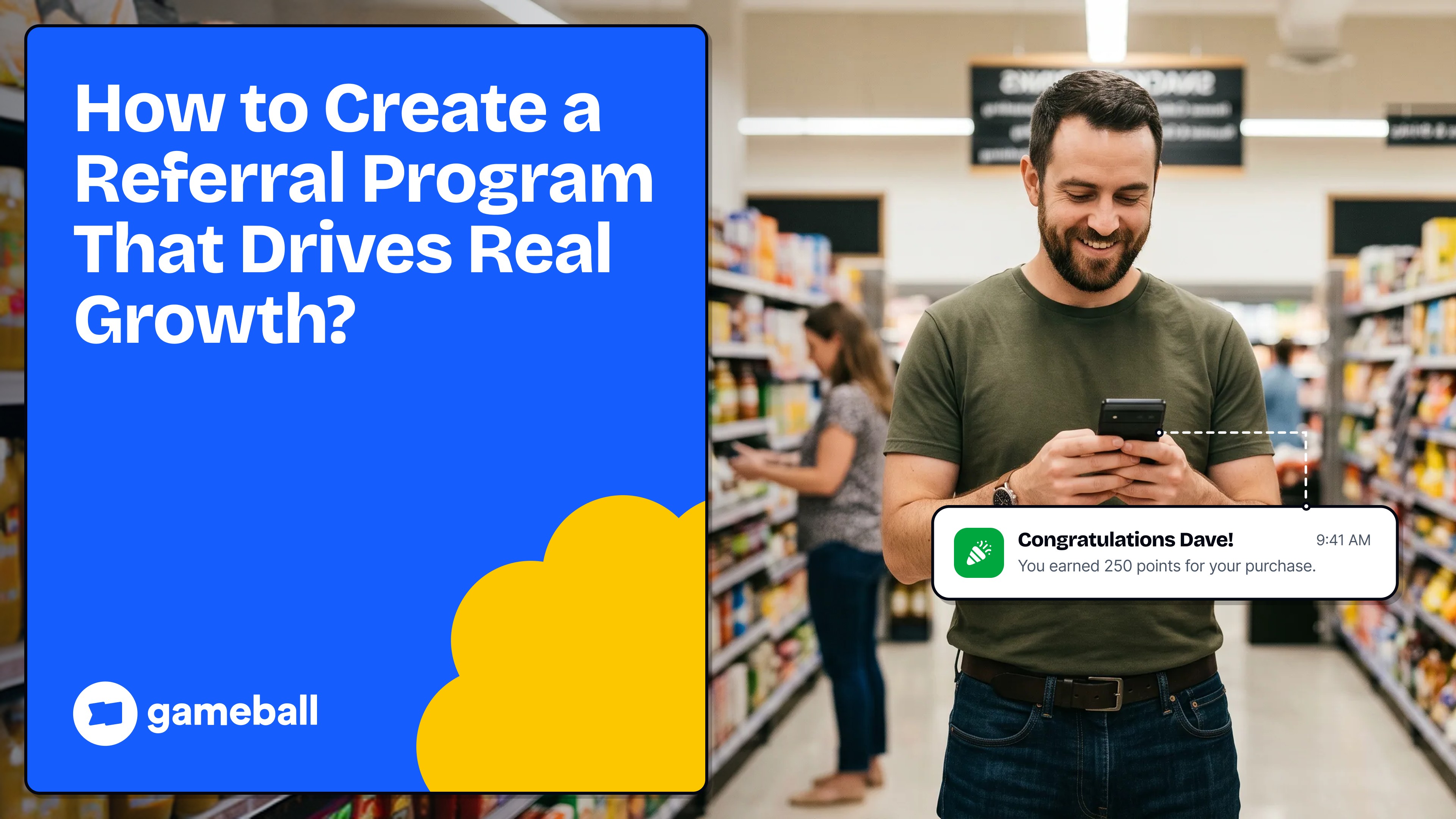
Referral programs consistently outperform paid acquisition channels; referred customers convert faster, spend more, and stick around longer. Yet most brands either skip referrals entirely or launch programs that quietly collect dust.
The difference between a referral program that drives growth and one that flatlines usually comes down to structure, incentives, and promotion. This guide walks through the mechanics of how referral programs work, the types you can build, and a step-by-step process for launching one that actually gets used.
What is a referral program?
A referral program is a structured system where existing customers recommend your brand to friends in exchange for rewards. To set up a successful program, you first define your goals and choose a compelling incentive, like a discount or cash, then use dedicated software to automate sharing links, track conversions, and distribute rewards. From there, you promote the program to customers at key touchpoints like post-purchase emails or after positive reviews.
What makes a referral program different from organic word-of-mouth? Attribution. With unique links and codes, you know exactly which customers drove which conversions, and you only pay rewards when someone actually converts.
Two parties are involved in every referral: the referrer (your existing customer) and the referee (the friend they invite). Most successful programs reward both sides, which creates mutual motivation to complete the transaction.
How a referral program works
The mechanics are straightforward once you see them in action. A customer joins your program and receives a unique referral link or code. They share that link via email, social media, or direct message. When a friend clicks and completes a qualifying action, usually a signup or purchase, the system validates the referral and distributes rewards to both parties.
Here's the typical flow:
- Step 1: Customer joins the program and gets a unique referral link
- Step 2: Customer shares the link through their preferred channel
- Step 3: Friend clicks the link and completes a qualifying action
- Step 4: The system validates the referral and triggers reward distribution
- Step 5: Brand tracks the conversion and measures ROI
Why referral programs drive growth
Before diving into the how-to, it helps to understand why referral programs consistently outperform other acquisition channels.
Lower customer acquisition costs
Referred customers cost less to acquire than those from paid advertising because your existing customers do the marketing for you. Instead of spending on ads with uncertain returns, you invest in rewards you control, and only pay when a conversion actually happens.
Higher customer lifetime value
Referred customers tend to spend more and stay longer because they arrive with built-in trust from someone they know. That trust translates directly to customer lifetime value; referred customers are more likely to become loyal, high-value buyers over time.
Stronger customer trust and retention
Referrals create a reciprocal relationship. When customers refer friends, they become more invested in your brand's success, which increases their own loyalty and likelihood of repeat purchases.
Types of referral programs
Before building your program, you'll want to understand which model fits your business. The structure you choose affects participation rates, costs, and long-term results.
One-sided referral programs
Only the referrer receives a reward. This model is simple to set up, but it may not motivate the friend to convert since they get nothing for participating.
Two-sided referral programs
Both parties receive value; this is the most common model. The mutual incentive structure drives higher participation because everyone wins.
Tiered referral programs
Rewards escalate as referrers hit milestones. For example, refer 5 friends and unlock a bigger bonus. Tiered programs encourage repeat referral behavior rather than one-and-done participation.
Multi-step referral programs
Rewards are distributed across multiple actions, perhaps a small reward on signup plus a larger reward on first purchase. Multi-step programs work well for longer customer journeys where you want to incentivize deeper engagement.
Gamified referral programs
Gamified programs incorporate game mechanics like progress bars, badges, and leaderboards to make referring feel engaging. Platforms like Gameball combine referrals with gamification, turning a transactional program into an ongoing experience.
How to create a referral program in 7 steps
Now for the practical part. The following seven steps will take you from concept to launch, with enough flexibility to adapt to your specific business model.
1. Define your referral program goals
Start with what you want to achieve. Are you focused on new customer acquisition, increased retention, higher average order value, or reduced customer acquisition cost? Your goals determine your incentive structure and how you measure success.
2. Identify your ideal referrers
Not all customers refer equally. Your best referrers are typically frequent buyers, customers who've given you high Net Promoter Scores, or recent purchasers who are still excited about their experience. Segment your customer base to find likely advocates, and targeting the right people increases participation rates and referral quality.
3. Choose the right referral incentives
Match your incentive type to your business model and margins. What works for an e-commerce brand won't necessarily work for a SaaS company.
- E-commerce: Percentage discounts, store credit, free products
- Subscription/SaaS: Free months, account credits, cash payouts
- Service businesses: Fixed monetary discounts, free service credits
- Retail/Omnichannel: Loyalty points, cashback, exclusive offers
Two-sided rewards consistently drive higher participation because both parties benefit.
4. Set event-based referral rules
Define what action triggers the reward. Is it a signup? A first purchase? A minimum spend threshold? Sophisticated programs can set multi-step rules, reward on signup, plus an additional reward on first purchase. Platforms like Gameball allow granular event-based rules without requiring engineering resources.
5. Build a shareable referral experience
Friction kills referrals. The easier you make sharing, the more people will do it. Provide unique tracking links, referral codes, pre-written share messages, social share buttons, and QR codes for in-store use. For mobile apps, deep links ensure a seamless experience. The goal is to reduce the sharing process to a single click.
6. Promote your referral program across channels
A referral program only works if customers know it exists. Don't launch and forget, actively promote at key touchpoints:
- Post-purchase confirmation emails and thank-you pages
- In-app notifications and website widgets
- SMS campaigns to engage customers
- Social media announcements
- Customer service mentions after positive interactions
The moment after a purchase is often the best time to ask for a referral; customers are most satisfied and engaged.
7. Track performance and optimize
Monitor your referral metrics and iterate based on what you learn. Tie everything back to the goals you set in step one. Which channels drive the most referrals? Which incentives perform best? Where are people dropping off? Referral software automates tracking, but you still want to review the data regularly.
Best incentives and rewards for referral programs
Choosing the right reward is often the difference between a program that thrives and one that stalls.
Cashback and store credit
Cashback works by crediting the customer's account, which encourages repeat purchases rather than one-time discounts. Store credit keeps customers in your ecosystem.
Discount codes
Discount codes are the most common reward type. They can be percentage-based or a fixed amount, and unique codes help with tracking and prevent abuse.
Free products and free shipping
Free products and free shipping have high perceived value, especially for e-commerce. Both work well when your margins allow for them.
Loyalty points
Referral rewards that feed into an existing loyalty program create compounding engagement. Unified platforms like Gameball tie referral rewards directly to loyalty points and tiers, so customers see their progress across multiple programs.
Milestone and tiered bonuses
Bonus rewards when referrers hit thresholds, like their 3rd or 10th referral, create ongoing motivation rather than one-and-done behavior.
How to promote a referral program
Even the best-designed program fails without visibility. Here's how to get your referral program in front of customers consistently.
Email and SMS campaigns
Automated post-purchase emails are your highest-converting touchpoint. Re-engagement campaigns for lapsed referrers and behavior-triggered SMS can reactivate participation over time.
In-app and website widgets
Dedicated referral widgets embedded in user accounts, homepages, or as slide-out modules keep the program visible. No-code deployment options mean you can launch without engineering support.
Social media sharing
Pre-populated share buttons for Instagram, Facebook, Twitter, and WhatsApp reduce friction. Personalized tracking links attribute social referrals accurately.
Post-purchase and checkout prompts
Capitalize on the moment of highest satisfaction. Display your referral offer on the confirmation page or in order confirmation emails when customers are most likely to act.
In-store and POS promotion
For omnichannel brands, QR codes, receipt prompts, and staff training extend your referral program to physical locations. POS integration ensures unified tracking across online and offline.
KPIs to measure referral program success
You can't improve what you don't measure. The following metrics tell you whether your program is working and where to optimize.
Referral conversion rate
Referral conversion rate is the percentage of shared links that convert to customers. Low conversion rates may indicate a weak offer or poor landing page experience.
Customer acquisition cost from referrals
Customer acquisition cost from referrals equals total referral program costs divided by customers acquired. Compare this figure to your paid channel CAC to understand relative efficiency.
Lifetime value of referred customers
Track whether referred customers have higher CLV than customers from other acquisition channels. Higher CLV validates the quality of referral-driven growth.
Referral participation rate
Referral participation rate is the percentage of customers who actively refer. Low rates may indicate poor awareness or weak incentives.
Return on referral incentives
Return on referral incentives measures revenue generated from referred customers versus the cost of rewards. This metric shows program profitability directly.
Common referral program mistakes to avoid
Even well-intentioned programs fail when they hit common pitfalls.
- Overcomplicating the process: Too many steps or confusing rules kill participation
- Weak or irrelevant incentives: Rewards that don't feel valuable to your specific audience won't motivate action
- Hiding the program: Failing to promote means low awareness and adoption
- Ignoring fraud prevention: Lack of validation rules leads to self-referrals and abuse
- No tracking or attribution: Manual tracking breaks down at scale
- One-and-done mentality: Not iterating based on data leaves growth on the table
Choosing the right referral program software
Instead of tracking referrals manually, dedicated software automates link generation, reward payouts, and performance tracking. Here's what to look for:
- Automated link and code generation: Unique tracking for every referrer
- Event-based reward rules: Flexibility to define what actions trigger payouts
- Multi-channel sharing: Support for email, social, SMS, in-app, and in-store
- Real-time tracking and analytics: Dashboard visibility into conversions and ROI
- Fraud prevention: Validation logic to prevent abuse
- Integration with loyalty and gamification: Unified programs that compound engagement
- Omnichannel support: Works across web, mobile app, and POS
Choosing a platform that integrates referrals with broader loyalty and gamification, like Gameball, eliminates the need to stitch together multiple tools.
Build a referral program that compounds growth with Gameball
Gameball brings referrals, loyalty, gamification, and promotions into one platform. You get event-based referral rules, milestone bonuses, ready-to-use widgets, and omnichannel support, all without heavy engineering investment.
Book a demo to see how Gameball can help you launch a referral program that drives real growth.
Frequently asked questions about referral programs
What is the easiest type of referral program to set up?
A two-sided referral program with a simple discount reward is the easiest to launch because both parties are incentivized and the mechanics are straightforward. Referral software with pre-built templates can have you live in minutes.
What are the four main types of customer referrals?
The four main types are one-sided (only the referrer is rewarded), two-sided (both parties are rewarded), tiered (escalating rewards for more referrals), and milestone-based (bonuses at specific thresholds). Most successful programs use two-sided structures to motivate both the referrer and the new customer.
How long does it take to launch a referral program?
With referral software that offers ready-to-use widgets and templates, you can launch a basic program in a few hours to a few days. More complex programs with custom rules, multi-step rewards, or integrations may take one to two weeks.
How do you prevent fraud in a referral program?
Fraud prevention requires validation rules such as requiring purchases before releasing rewards, blocking self-referrals, setting IP or device limits, and holding rewards until actions are verified. Referral platforms like Gameball include built-in fraud controls.
Can a referral program be part of a loyalty program?
Integrating referrals with loyalty creates compounding engagement, referrers earn points that increase their tier status, and referred friends immediately join the loyalty program. A unified platform eliminates data silos and delivers a seamless customer experience.
.svg)
.svg)
.svg)

Ready to level up your game?
Create your first campaign and start seeing results in 30 days.
Ready to grow?
Get in touch with our sales team today.
The loyalty vendor checklist your CTO
will thank you for
Discover engineering challenges, essentials, and more from global brands.

Gameball Staff
Stay ahead on retention
Subscribe to our newsletter and get all the latest updates as we post.

Ready to level up your game?
Create your first campaign and start seeing results in 30 days.
Read related articles
_compressed%2520(1)%2520(1).avif)

.avif)

%2520(1)%2520(1)%2520(1)%2520(2)%2520(1).avif)
Ready to level up your customer loyalty?
Level up your customer loyalty!


.avif)
.avif)
.avif)
.avif)