
%207.svg)

.svg)

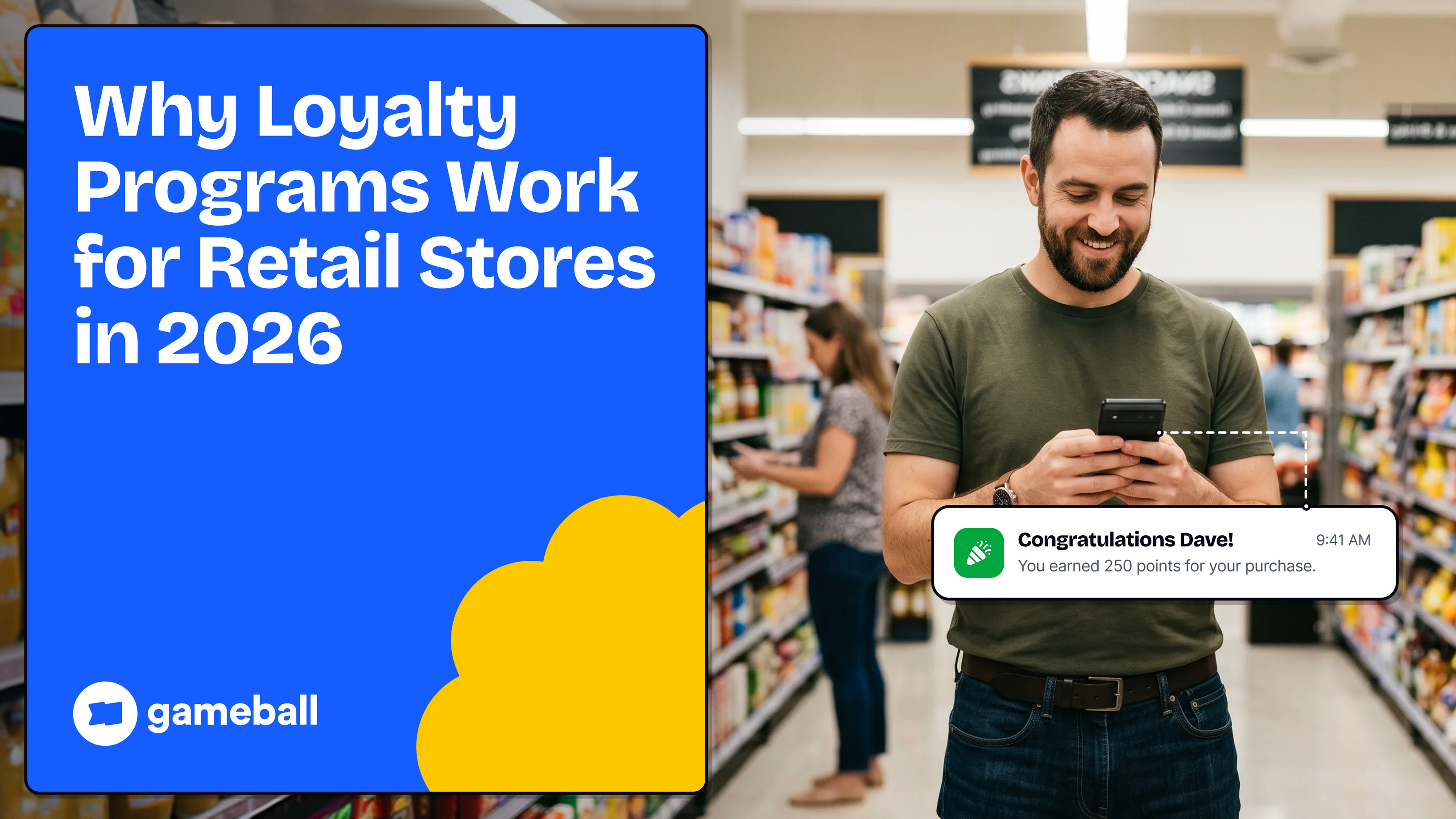
Retail loyalty programs have become the difference between stores customers visit once and stores they return to repeatedly. When shoppers know they're earning toward something, whether points, status, or exclusive perks, they're far more likely to choose your store over a competitor, even when prices are nearly identical.
This guide covers how retail loyalty programs work across channels, the program types that drive results, and practical steps to build one that increases repeat purchases and customer lifetime value.
What is a retail loyalty program?
A retail loyalty program is a structured strategy designed to reward shoppers for repeat business. Customers earn points, cashback, or exclusive perks when they make purchases or engage with your brand, then redeem those rewards for discounts, free products, or special experiences.
Today's programs look nothing like the paper punch cards of the past. Modern loyalty operates digitally across your website, mobile app, and in-store POS, creating one unified experience wherever customers choose to shop.
Why loyalty programs work for retail stores
Loyalty programs work because they give customers a tangible reason to come back. When shoppers know they're earning toward a reward, they're more likely to pick your store over a competitor, even when prices are similar.
The business impact shows up in the numbers. Research from Bain & Company found that increasing customer retention by just 5% can boost profits by 25% to 95%. Repeat customers spend more per transaction and cost less to serve than new ones.
Here's what makes loyalty programs effective:
- Repeat purchases: Rewards create a reason to return rather than shop elsewhere
- Higher lifetime value: Loyal customers stay longer and spend more over time, directly increasing CLV
- Customer data: Every transaction feeds your understanding of what customers want
- Lower acquisition costs: Retaining existing customers costs a fraction of acquiring new ones
- Differentiation: A well-designed program sets you apart in crowded retail categories
- Word-of-mouth: Satisfied members naturally recommend your brand to friends
How retail loyalty programs work across POS, web, and app
Omnichannel loyalty means customers earn and redeem rewards whether they're shopping in your physical store, browsing your website, or using your mobile app. Their profile, points balance, and tier status sync in real time across every touchpoint.
In-store, customers identify themselves at checkout using a phone number, digital card, or app scan. Online, their account automatically tracks purchases and applies available rewards. This unified approach eliminates the frustration of earning points in one channel but being unable to use them in another.
Types of loyalty programs for retail stores
Different program structures suit different retail models. Most successful programs today combine multiple elements rather than relying on a single approach.
Program Type
Best For
How Customers Earn
Points-based
High-frequency retail
Points per dollar spent
Tiered/VIP
Aspirational brands
Status based on cumulative spend
Paid membership
Premium retailers
Flat fee for exclusive benefits
Cashback
Price-sensitive shoppers
Percentage back on purchases
Gamified
Engagement-focused brands
Completing challenges, streaks, and missions
Points-based programs
Points-based programs are the most common structure. Customers earn points for every dollar spent and redeem them for discounts, free products, or other rewards. The simplicity makes participation easy to understand.
Tiered and VIP programs
Tiered programs offer escalating benefits as customers reach higher status levels. The aspiration to unlock the next tier motivates increased spending and creates a sense of achievement.
Paid membership programs
Paid programs charge an annual or monthly fee in exchange for premium perks like free shipping, exclusive discounts, or early access. These work best when the perceived value clearly exceeds the membership cost.
Cashback programs
Cashback returns a percentage of each purchase as store credit or wallet balance. This straightforward value proposition appeals to price-conscious shoppers who want immediate, tangible returns.
Gamified loyalty programs
Gamification adds game-like elements, challenges, badges, streaks, leaderboards to loyalty. Rather than rewarding only transactions, gamified programs reward behaviors and create daily engagement habits.
Hybrid loyalty programs
Most modern programs are hybrids, combining points with tiers, gamification, and personalized rewards. This flexibility lets you engage different customer segments in ways that resonate with their motivations.
Key components of an effective retail loyalty program
What separates successful programs from forgettable ones? The difference often comes down to a few critical elements.
Flexible earning and redemption rules
Configurable rules let you reward specific behaviors, product categories, or timeframes. You might offer double points on slow-moving inventory or bonus rewards during off-peak hours. The ability to adjust rules without developer involvement keeps your program responsive.
Tiered rewards and VIP segments
Tiers create aspiration and recognize your best customers. Auto-upgrade and downgrade logic, combined with tier-specific perks, motivates continued engagement while protecting your margins.
Omnichannel integration with your POS
Seamless POS integration ensures in-store customers have access to the same program as online shoppers. Digital cards and phone number lookup make identification frictionless at checkout.
Personalization and customer segmentation
Segmentation groups customers by behavior, spend level, or preferences. Personalized rewards based on customer segments increase relevance and redemption rates. Generic offers feel transactional; tailored ones feel valuable.
Fraud and margin protection controls
Controls like redemption limits, validation holds, and refund auto-adjustment protect your margins from abuse. These safeguards become increasingly important as your program scales.
Real-time analytics and reporting
Dashboards that track program performance, member activity, and program ROI help you understand what's working. The goal is to tie rewards directly to revenue outcomes, not just enrollment numbers.
How gamification makes retail loyalty programs more effective
Traditional points-only programs often fail to create daily habits. Customers earn points, forget about them, and only engage when they're ready to redeem. Gamification changes this dynamic by making the program itself engaging.
Platforms like Gameball offer plug-and-play gamification that requires no development, letting you add game mechanics to your existing loyalty program quickly.
Effective gamification elements include:
- Challenges and missions: Time-limited goals that reward specific actions like trying a new product category
- Streaks: Consecutive engagement that builds habit loops and keeps customers returning daily
- Badges and achievements: Visual recognition of progress that creates a sense of accomplishment
- Spin-to-win and instant games: Surprise rewards that increase excitement and anticipation
- Progress bars: Visual indicators showing proximity to the next reward or tier
Examples of retail brands with successful loyalty programs
A few brands demonstrate different approaches that work across various retail categories.
Starbucks Rewards
Starbucks built a mobile-first, points-per-dollar model with tiered status and gamified challenges. The seamless app experience makes ordering, paying, and earning rewards feel effortless.
Sephora Beauty Insider
Sephora's tiered program offers experiential rewards and exclusive access alongside traditional discounts. The community elements and personalization make members feel like insiders rather than just customers.
Nike Membership
Nike offers free membership with exclusive products, early access, and personalized content. The value-based, lifestyle approach builds emotional connection beyond transactions.
IKEA Family
IKEA Family provides free membership with discounts, workshops, and family-oriented perks. The program delivers value beyond purchases, creating reasons to engage with the brand regularly.
How to create a loyalty program for your retail store
Building an effective program requires thoughtful planning before you choose a platform or launch to customers.
1. Define your loyalty goals and KPIs
Start by specifying what you want to achieve. Are you focused on increasing repeat purchase rate, boosting average order value, collecting customer data, or driving referrals? Your goals shape every subsequent decision.
2. Choose the right program type for your customers
Match your program structure to customer behavior and brand positioning. High-frequency retailers often benefit from points-based programs, while premium brands might lean toward paid memberships or tiered status.
3. Design earning and redemption rules
Set clear rules for how customers earn, through purchases, actions, or engagement, and how they redeem through discounts, freebies, or experiences. Simplicity increases participation; complexity creates friction.
4. Build tiered rewards and personalized incentives
Create tiers if appropriate for your customer base, and design segment-based rewards that feel relevant. Personalization increases perceived value without necessarily increasing cost.
5. Integrate with your POS and ecommerce stack
Ensure the program works seamlessly across all sales channels. Ready SDKs, APIs, and native integrations accelerate implementation and reduce ongoing maintenance.
6. Launch, promote, and iterate based on data
Start with a soft launch, recruit members through multiple touchpoints, and optimize continuously based on analytics. The best programs evolve based on what the data reveals.
Loyalty program metrics that retail stores should track
Measurement is essential for proving ROI and identifying optimization opportunities.
- Repeat purchase rate: The percentage of customers who make more than one purchase, indicating whether your program drives return visits
- Customer lifetime value: Total revenue expected from a customer over their relationship with your brand
- Average order value: Average spend per transaction, which loyalty programs can increase through tiered rewards and bonus offers
- Redemption rate: The percentage of earned rewards that are redeemed; low rates may indicate friction or irrelevant rewards
- Active member rate: The percentage of enrolled members actively earning or redeeming, measuring engagement beyond enrollment
- Retention rate: The percentage of customers who continue purchasing over time
Common pitfalls to avoid in retail loyalty programs
Many programs fail due to preventable mistakes. Here's what to watch for:
- Rewarding only transactions: Programs focused solely on purchases miss engagement opportunities; behavior-based rewards create stronger habits
- Overcomplicating the earning structure: Confusing point calculations or too many rules deters participation
- Eroding margins with blanket discounts: Giving away value without segmentation or controls hurts profitability
- Ignoring channel gaps: Frustration builds when rewards earned online can't be redeemed in-store
- Failing to personalize: Generic rewards feel transactional; segmentation and behavioral data enable relevance
Build a retail loyalty program that drives real revenue
Modern retail loyalty requires omnichannel integration, gamification, and behavior-based rewards, not just points. The right platform eliminates engineering bottlenecks and lets marketing teams own the program without constant developer involvement.
Gameball helps retail brands launch and scale loyalty programs across POS, web, and app with configurable rules, built-in gamification, and enterprise-grade infrastructure.
Book a demo to see how it works for your retail business.
Frequently asked questions about retail loyalty programs
What are the four types of customer loyalty?
The four types are transactional loyalty (driven by discounts), emotional loyalty (driven by brand connection), behavioral loyalty (driven by habit), and advocacy loyalty (driven by willingness to recommend). The most effective programs aim to build emotional and behavioral loyalty, not just transactional.
How much does a retail loyalty program cost to implement?
Costs vary widely based on program complexity, integration requirements, and platform choice. SaaS loyalty platforms typically charge based on active members or transactions, while custom-built programs require significant upfront development investment.
How long does it take to launch a retail loyalty program?
With a modern loyalty platform and ready integrations, brands can launch a basic program within weeks. More complex programs with custom tiers, gamification, and deep POS integration may take several months to fully configure and test.
Are loyalty programs profitable for small retail stores?
Yes, when designed appropriately. Small retailers benefit from increased repeat visits and customer data. The key is choosing a platform with flexible pricing and avoiding overly generous rewards that erode thin margins.
How do retail loyalty programs integrate with POS systems?
Integration typically occurs via APIs or native connectors that sync customer profiles, transactions, and reward balances in real time. This enables in-store associates to identify members, apply rewards, and track earnings at checkout without manual processes.
.svg)
.svg)
.svg)

Ready to level up your game?
Create your first campaign and start seeing results in 30 days.
Ready to grow?
Get in touch with our sales team today.
The loyalty vendor checklist your CTO
will thank you for
Discover engineering challenges, essentials, and more from global brands.

Gameball Staff
Stay ahead on retention
Subscribe to our newsletter and get all the latest updates as we post.

Ready to level up your game?
Create your first campaign and start seeing results in 30 days.
Read related articles
Ready to level up your customer loyalty?
Level up your customer loyalty!


.avif)
.avif)
.avif)
.avif)