
%207.svg)

.svg)

Most brands spend the bulk of their marketing budget chasing new customers while their existing ones quietly slip away. The math rarely works in their favor; acquiring a new customer costs five to seven times more than keeping one you already have.
Customer retention programs flip this equation by giving customers structured, ongoing reasons to come back. This guide covers the types of programs that work, how top brands like Starbucks and Sephora use them, the metrics that matter, and how to build one that actually moves your business forward.
What are customer retention programs?
Customer retention programs are structured initiatives that incentivize existing buyers to remain loyal and continue making purchases. Rather than one-off discounts or seasonal promotions, retention programs create ongoing reasons for customers to return, points accumulating toward a reward, a tier they're close to unlocking, or perks they've earned but haven't yet redeemed.
The goal is straightforward: prevent churn by consistently delivering value through targeted incentives, personalized experiences, and continuous engagement. Acquiring a new customer typically costs five to seven times more than keeping an existing one, which makes retention programs one of the most cost-effective growth levers available.
The best programs go beyond rewarding transactions. They reward behaviors, referrals, reviews, app engagement, and social sharing that build habits and deepen the customer relationship over time.
Why customer retention programs matter for growth and profitability
Most brands pour the majority of their marketing budget into acquisition while underinvesting in customers they already have. Retention programs flip this equation.
When customers stay longer and buy more often, you reduce reliance on paid channels, increase purchase frequency, and create predictable revenue from repeat buyers. Here's what a strong retention program delivers:
- Lower acquisition dependency: Loyal customers reduce the pressure to constantly find new buyers through expensive paid channels
- Predictable revenue: Repeat purchasers create stable, forecastable cash flow month over month
- Competitive differentiation: A well-designed program becomes a moat that competitors struggle to replicate
Modern retention programs also reward behavior and habits, not just transactions. This shift, from "spend more, earn more" to "engage more, earn more", separates programs that drive real loyalty from programs that simply discount margin away.
Customer retention vs customer acquisition
Customer acquisition brings new buyers to your brand. Customer retention keeps them coming back. Both matter, but they work on different timelines and economies.
Acquisition delivers immediate results: run an ad, get a customer. However, acquisition costs tend to rise over time as channels become more competitive. Retention, on the other hand, compounds. A customer who stays for three years is worth far more than three customers who each buy once.
Brands that grow most efficiently invest in both, though they don't neglect retention in favor of the more visible acquisition metrics.
Benefits of a strong customer retention program
Retention programs drive measurable business outcomes that show up directly in your unit economics.
Higher customer lifetime value
Customer lifetime value (CLV) measures the total revenue a customer generates over their entire relationship with your brand. Retention programs extend this relationship and increase spend per customer by giving them ongoing reasons to return.
Lower customer acquisition cost
When customers stay longer and buy more often, you don't need to acquire as many new ones to hit revenue targets. This improves marketing efficiency and shortens CAC payback periods.
Increased repeat purchase rate
Repeat purchase rate tracks the percentage of customers who buy more than once. Retention programs directly influence this metric through rewards, tiers, and personalized offers that incentivize the next purchase.
Stronger brand advocacy and referrals
Loyal customers don't just buy, they recommend. Referral programs turn this advocacy into a measurable acquisition channel, rewarding customers for bringing in friends while reducing cost per acquisition.
Types of customer retention programs
Brands can choose from several program types depending on their business model, customer behavior, and margin profile. Many successful programs combine multiple structures.
Points and cashback programs
Customers earn points or cashback for purchases, then redeem them for discounts, products, or services. This is the most common program type because the value exchange is clear and immediate.
The best points programs offer flexibility in earning rules, by spend, category, timing, or customer segment, rather than a flat rate for everyone.
Tiered and VIP loyalty programs
Tiered loyalty programs unlock exclusive perks as customers reach spending thresholds. Benefits might include free shipping, early access to products, or VIP experiences.
Tiers work because they create progression. Customers aren't just earning rewards, they're working toward a status that feels meaningful.
Paid membership programs
Subscription-based models charge customers for premium benefits like free shipping, exclusive content, or waived fees. Amazon Prime is the most well-known example.
Paid programs create recurring commitment. Once a customer pays for membership, they're motivated to get their money's worth through repeat purchases.
Referral programs
Referral incentives turn customers into an acquisition channel by rewarding both the sender and receiver. Referral programs bridge retention and acquisition; your best customers bring in new ones.
Gamified retention programs
Gamification adds engagement through challenges, badges, streaks, and in-app games. Instead of just rewarding purchases, gamified programs reward behaviors that build daily habits.
This approach works particularly well for apps and digital-first brands where engagement frequency matters as much as transaction value. Gameball's platform is built around this principle, turning loyalty into an interactive, habit-forming experience rather than a static points ledger.
Subscription and auto-replenishment programs
Auto-replenishment locks in recurring purchases for consumable products. Customers subscribe once, and products arrive automatically on a schedule.
Convenience is the primary value driver. Customers don't have to remember to reorder, and brands get predictable recurring revenue.
Community and advocacy programs
Community programs build belonging through private groups, forums, and exclusive events. They create emotional loyalty that goes beyond transactional rewards.
Community programs work best for brands with strong identity and passionate customer bases, fitness brands, hobbyist communities, or lifestyle products.
Customer retention program examples from top brands
The most successful retention programs combine multiple elements, points, tiers, gamification, and community into a cohesive experience.
Starbucks Rewards
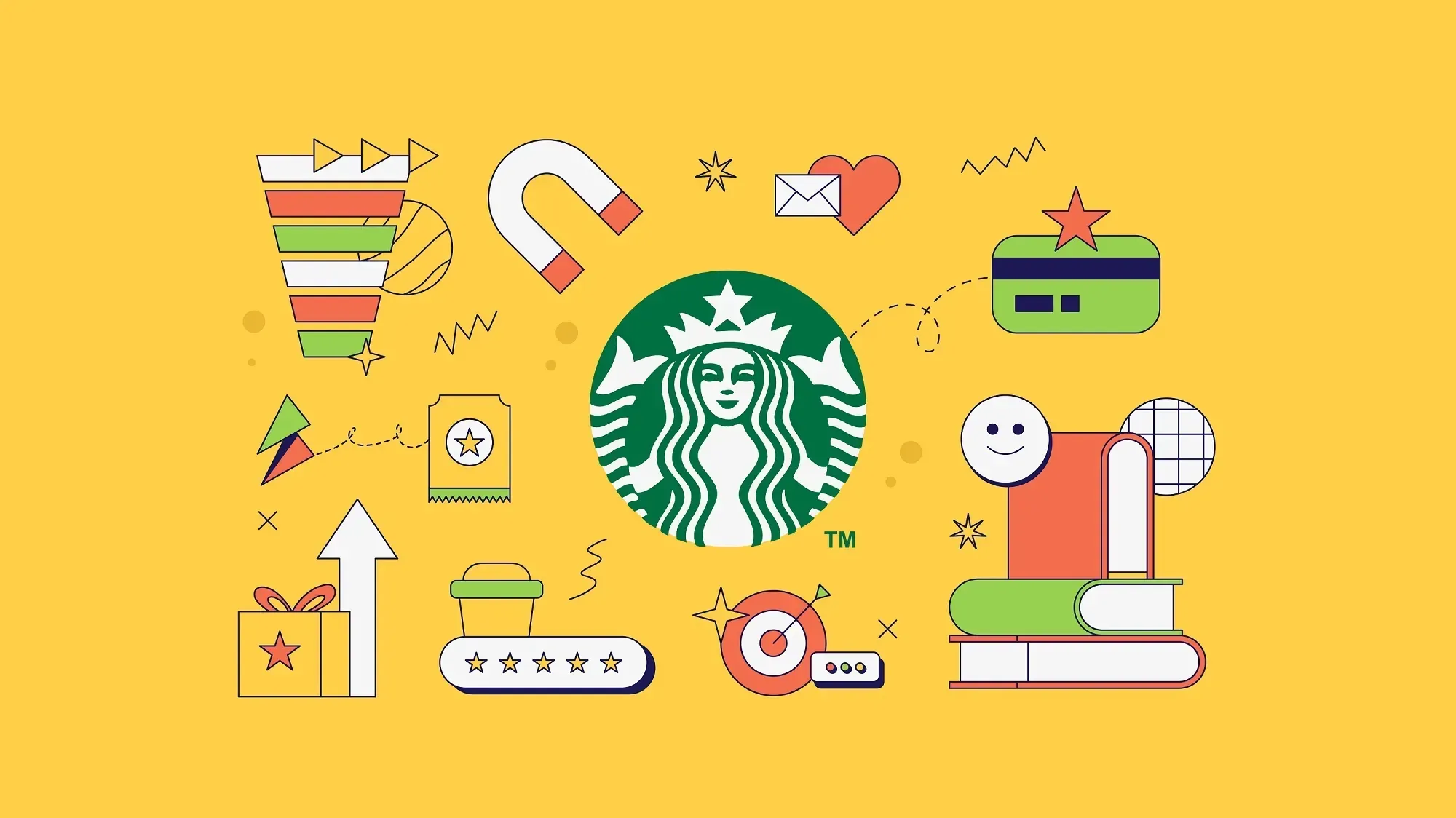
Starbucks runs a points-based program with tiered benefits and gamified elements like challenges and bonus stars. The mobile app integrates ordering, payment, and rewards into one seamless experience, making it easy for customers to engage across channels.
Sephora Beauty Insider
Sephora's three-tier program offers experiential rewards, birthday gifts, and exclusive access. The tiers, Insider, VIB, and Rouge, motivate higher spend by making status feel aspirational.
Amazon Prime
Amazon's paid membership bundles shipping, streaming, and exclusive deals into one subscription. The breadth of benefits creates habitual purchasing behavior. Prime members shop more frequently because they've already paid for the privilege.
Nike Membership
Nike offers free membership with early access, personalized content, and community elements. Rather than transactional rewards, Nike builds brand affinity through exclusive experiences and content.
Chewy Autoship
Chewy's subscription model combines automatic reordering with proactive customer service. The brand is known for small touches, like sending sympathy cards when a customer's pet passes away, that create an emotional connection beyond convenience.
Key metrics to measure a customer retention program
Tracking the right metrics ensures your program delivers ROI, not just engagement.
Customer retention rate
Retention rate measures the percentage of customers who remain over a period. The formula: (Customers at end − New customers) ÷ Customers at start × 100.
What counts as "good" varies by industry, but tracking this metric over time shows whether your program is working.
Customer churn rate
Churn rate is the inverse of retention, the percentage of customers lost over a period. Reducing churn is the primary goal of any retention program.
Customer lifetime value
CLV estimates the total revenue expected from a customer over their relationship with your brand. Retention programs directly increase CLV by extending relationships and increasing purchase frequency.
Repeat purchase rate
Repeat purchase rate tracks the percentage of customers who make more than one purchase. This is a leading indicator of program effectiveness; if repeat purchases aren't increasing, something isn't working.
Average order value
Average order value (AOV) measures the average amount spent per transaction. Retention programs can increase AOV through tiered rewards and spend-based incentives that encourage customers to add more to their cart.
How to build a customer retention program
Launching a program requires strategic planning, not just selecting a tool. Here's a step-by-step process.
Step 1. Define retention goals and KPIs
Start by setting clear objectives: reduce churn by a specific percentage, increase repeat purchase rate, boost CLV. Your KPIs tie rewards directly to ROI, so you can measure whether the program is working.
Step 2. Segment your customer base
Use RFM analysis, recency, frequency, monetary value, and behavioral data to segment customers. Different segments respond to different incentives. Your VIPs don't respond to the same offers as lapsed customers.
Step 3. Choose the right program type
Match your program type to your business model and customer expectations. A subscription brand might prioritize auto-replenishment; a lifestyle brand might lean into community. Hybrid approaches often work best.
Step 4. Design earning and reward rules
Configure how customers earn (points per dollar, actions, behaviors) and what they can redeem (discounts, products, experiences). Build in margin protection and fraud prevention from the start.
Step 5. Launch across web, app, and POS
Deploy your program across all customer touchpoints so the experience feels consistent. Programs embedded into existing channels, rather than requiring a separate app download, typically see higher engagement.
Step 6. Measure, iterate, and optimize
Use analytics to track performance against your KPIs. A/B test rewards, communications, and rules. The best programs evolve continuously, and business teams can make changes without waiting on engineering.
Ready to launch a retention program that rewards behavior, not just transactions? Book a demo with Gameball to see how gamified loyalty works across web, app, and in-store.
Common customer retention program mistakes to avoid
Many programs fail due to avoidable mistakes. Here's what to watch for.
Rewarding only transactions
Transaction-only programs miss engagement opportunities. Modern programs reward behaviors like referrals, reviews, social sharing, and app engagement, not just purchases.
Ignoring personalization and segmentation
One-size-fits-all programs underperform. Segment-based rewards and personalized communications based on customer behavior consistently outperform generic offers.
Letting engineering bottlenecks slow iteration
Programs that require developer involvement for every change can't adapt quickly. Business teams benefit from being able to configure rules, launch campaigns, and adjust rewards without filing engineering tickets.
Failing to protect margins from reward abuse
Risks like double-spending, fake referrals, and reward stacking can erode margins fast. Programs benefit from built-in fraud controls, validation logic, and redemption limits from day one.
Choosing the right customer retention platform
The platform you choose determines how flexible, scalable, and effective your program can be. Here's what to look for:
- Flexible program design: Rules-based earning and redemption without cookie-cutter templates
- Omnichannel deployment: Works across web, mobile app, and POS
- Gamification and engagement: Beyond points, challenges, badges, streaks, games
- Personalization: Segment-based rewards and behavior-triggered communications
- Analytics tied to ROI: Connects rewards to LTV, retention rate, and revenue
- Enterprise-grade infrastructure: Data residency, compliance (GDPR, CCPA, PDPL), and scalability
Gameball brings loyalty, gamification, promotions, and referrals into one platform, designed to work across web, mobile, and in-store without requiring separate apps or constant engineering support.
Book a demo to see how it works.
Frequently asked questions about customer retention programs
What are the 4 Ps of customer retention?
The 4 Ps of customer retention are personalization, proactive support, post-purchase engagement, and program rewards, a framework for keeping customers engaged across their lifecycle.
What are the 8 Cs of customer retention?
The 8 Cs include commitment, consistency, communication, customization, convenience, community, care, and character, principles that guide how brands build lasting customer relationships.
What is the difference between a loyalty program and a customer retention program?
A loyalty program is one type of customer retention program focused on rewards. Customer retention programs encompass all initiatives designed to keep customers engaged, including support, personalization, and community building.
How long does it take to launch a customer retention program?
Launch timelines range from a few weeks to several months, depending on program complexity and integration requirements. Platforms with ready SDKs and no-code configuration can significantly accelerate deployment.
How much does a customer retention program cost to implement?
Implementation costs vary based on program type, platform choice, and customization requirements. Enterprise platforms typically offer tiered pricing based on customer volume and feature requirements.
.svg)
.svg)
.svg)

Ready to level up your game?
Create your first campaign and start seeing results in 30 days.
Ready to grow?
Get in touch with our sales team today.
The loyalty vendor checklist your CTO
will thank you for
Discover engineering challenges, essentials, and more from global brands.

Gameball Staff
Stay ahead on retention
Subscribe to our newsletter and get all the latest updates as we post.

Ready to level up your game?
Create your first campaign and start seeing results in 30 days.
Read related articles
.avif)
Ready to level up your customer loyalty?
Level up your customer loyalty!


.avif)
.avif)
.avif)
.avif)