%207.svg)

.svg)

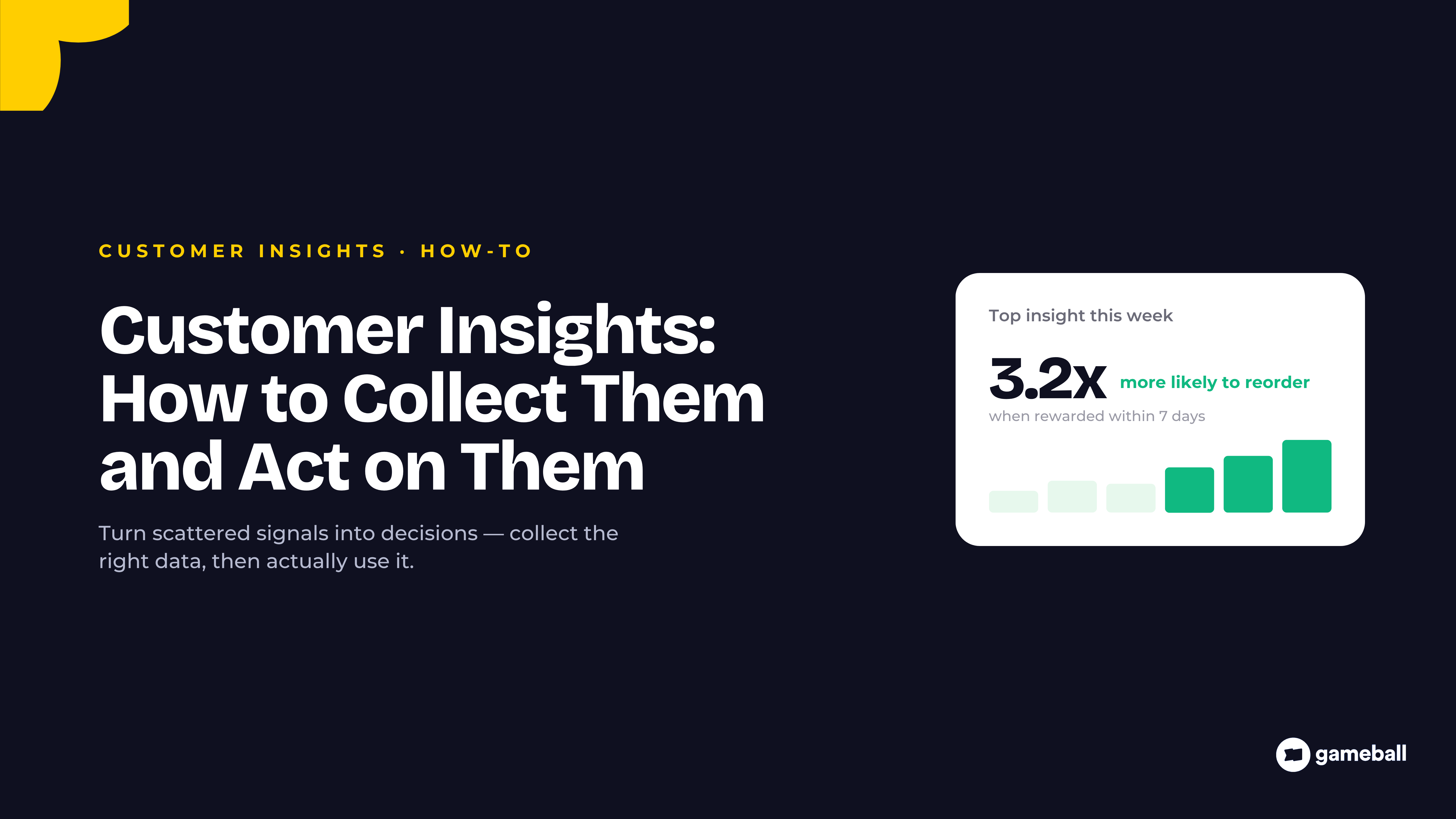
Customer insights are the meaningful conclusions you draw from customer data that help you make better business decisions. They turn scattered numbers and feedback into a clear understanding of what customers want and why, so you can improve products, marketing, and loyalty. This guide explains the types of insights, how to collect them without a big budget, and how to turn them into action.
What are customer insights?
Customer insights are interpretations of customer data that reveal needs, motivations, and behaviors. Data on its own is just numbers; an insight is the 'so what' behind the numbers. For example, noticing that customers who join your loyalty program in their first week spend twice as much over the next year is an insight, and it tells you exactly where to focus.
Why customer insights matter
Insights reduce guesswork. Instead of assuming what customers want, you know, which means less wasted spend and more effective campaigns. Brands that act on customer insights personalize better, retain more customers, and spot problems and opportunities earlier. In a crowded market, understanding your customers more deeply than competitors do is a durable advantage. The payoff shows up across the business, in more effective campaigns, higher retention, stronger loyalty, and products that fit what customers actually want rather than what you assume they want.
The main types of customer insights
- Behavioral insights: what customers do, such as browsing, buying, and redeeming rewards. Closely tied to behavioral loyalty.
- Transactional insights: purchase history, order value, and frequency, often analyzed with models like RFM segmentation.
- Attitudinal insights: how customers feel, gathered from surveys, reviews, and support conversations.
- Demographic and profile insights: who your customers are, which helps with targeting and product decisions.
How to collect customer insights
You already have most of the raw material. Here is where to look:
1. Analytics and transaction data. Your site, app, and order data reveal what customers actually do.
2. Surveys and quizzes. Short, targeted questions capture motivations and preferences directly.
3. Reviews and support conversations. The language customers use shows what they value and what frustrates them.
4. Loyalty program data. The rewards customers choose and the actions they take are a rich, continuous source of insight, captured automatically by a loyalty program.
5. Social listening. Monitoring mentions and conversations reveals sentiment and emerging trends.
How to turn insights into action
Insights only matter if they change what you do. Put them to work like this:
- Sharpen segmentation. Feed insights into your customer segmentation so each group gets relevant treatment.
- Personalize rewards and offers. Give customers more of what the data shows they value.
- Improve products and content. Build and promote what your best customers actually want.
- Prevent churn. Use early-warning insights to re-engage at-risk customers before they leave.
- Prioritize spend. Invest more in the segments and channels with the highest returns.
Tools and data you need
You do not need a data science team to begin. You need a way to bring customer data together, a way to analyze it, and a way to act on it. A platform that combines segments and analytics with loyalty and messaging closes the loop, so insights flow straight into action rather than sitting in a report.
Common mistakes to avoid
- Collecting data you never use. Gather insight with a decision in mind, not for its own sake.
- Relying on one source. Combine behavioral, transactional, and attitudinal data for a full picture.
- Confusing correlation with cause. Test your assumptions before acting on them at scale.
- Letting insights go stale. Customer behavior shifts, so refresh your analysis regularly.
Customer insight examples
Insights become clearer with real examples. Here are three that lead directly to action:
- The fast-second-purchase insight. You notice that customers who make a second purchase within 30 days go on to spend far more over the following year. The action: build a post-purchase flow and a first-reward milestone that pulls the second purchase forward.
- The reward-preference insight. Your data shows one segment always redeems for discounts while another redeems for early access. The action: offer savings to the first group and status perks to the second, raising redemption and satisfaction for both.
- The churn-signal insight. Customers who stop opening emails for three weeks rarely buy again. The action: trigger a win-back offer as soon as that silence begins, before they are gone for good.
Building an insights-driven culture
Insights create the most value when acting on them becomes a habit rather than a one-off project. That means making customer data easy for the whole team to access, framing decisions around what the data shows, and closing the loop by measuring whether each action worked. The most customer-centric brands review key insights regularly, share them widely, and let them shape everything from campaigns to product roadmaps. Over time, this discipline compounds into a real advantage, because you understand your customers a little better than your competitors do, and you act on that understanding faster.
How to prioritize which insights to act on
Most brands uncover more insights than they can act on at once, so prioritization matters. A simple way to decide is to weigh each insight on two questions: how much impact would acting on it have, and how easy is it to act on. Insights that are high impact and easy to act on come first, such as fixing a drop-off point in your checkout or rewarding a behavior that clearly predicts higher spend.
Be wary of insights that are interesting but not actionable. Knowing that a segment prefers a certain color is only useful if you can do something with it. Focus on insights that connect to a lever you control: a message you can send, a reward you can offer, a step you can remove. It also helps to tie each insight to a metric, so you can prove whether acting on it worked. When you consistently pursue the highest-impact, most actionable insights and measure the results, you build a track record that earns wider support for a data-driven approach. This turns customer insight from an occasional report into a steady engine of better decisions, and it keeps the team focused on the work that actually moves retention, revenue, and lifetime value.
How Gameball helps
Gameball's segments and analytics turn everyday customer activity into clear, actionable insights, then let you act on them instantly with loyalty, gamification, and automated journeys. Book a demo to see your customers more clearly.
Related reads
- Customer Segmentation: Strategy, Process & Growth Tips
- What Is RFM Customer Segmentation in E-commerce?
- How To Improve Customer Lifetime Value Using Loyalty and Retention
Frequently asked questions
What are customer insights?
Customer insights are meaningful conclusions drawn from customer data that guide better business decisions. They turn raw numbers and feedback into a clear understanding of what customers want and why.
What are the main types of customer insights?
The main types are behavioral, transactional, attitudinal, and demographic or profile insights. Combining them gives the fullest understanding of your customers.
How do you collect customer insights?
Collect them from analytics and transaction data, surveys and quizzes, reviews and support conversations, loyalty program data, and social listening. Most brands already have this data available.
How do you use customer insights?
Use them to sharpen segmentation, personalize rewards and offers, improve products and content, prevent churn, and prioritize spend on the highest-return segments and channels.
What is the difference between data and customer insights?
Data is the raw material, numbers, events, and feedback. An insight is the meaningful conclusion you draw from that data, the 'so what' that tells you what to do. Data on its own does not change decisions; insights do.
What tools do you need to gather customer insights?
At a minimum you need a way to bring customer data together, a way to analyze it, and a way to act on it. Analytics tools, survey tools, and a loyalty platform with built-in segments and analytics cover most needs without a dedicated data team.
How do customer insights improve retention?
Insights reveal why customers leave and which behaviors predict loyalty, so you can act before customers churn. For example, spotting that inactivity precedes churn lets you trigger a win-back offer early, while learning what your best customers value helps you reward and keep them.
.svg)
.svg)
.svg)

Ready to level up your game?
Create your first campaign and start seeing results in 30 days.
Ready to grow?
Get in touch with our sales team today.
The loyalty vendor checklist your CTO
will thank you for
Discover engineering challenges, essentials, and more from global brands.

Gameball Staff
Stay ahead on retention
Subscribe to our newsletter and get all the latest updates as we post.

Ready to level up your game?
Create your first campaign and start seeing results in 30 days.
Read related articles




Ready to level up your customer loyalty?
Level up your customer loyalty!


.avif)
.avif)
.avif)
.avif)