%207.svg)

.svg)

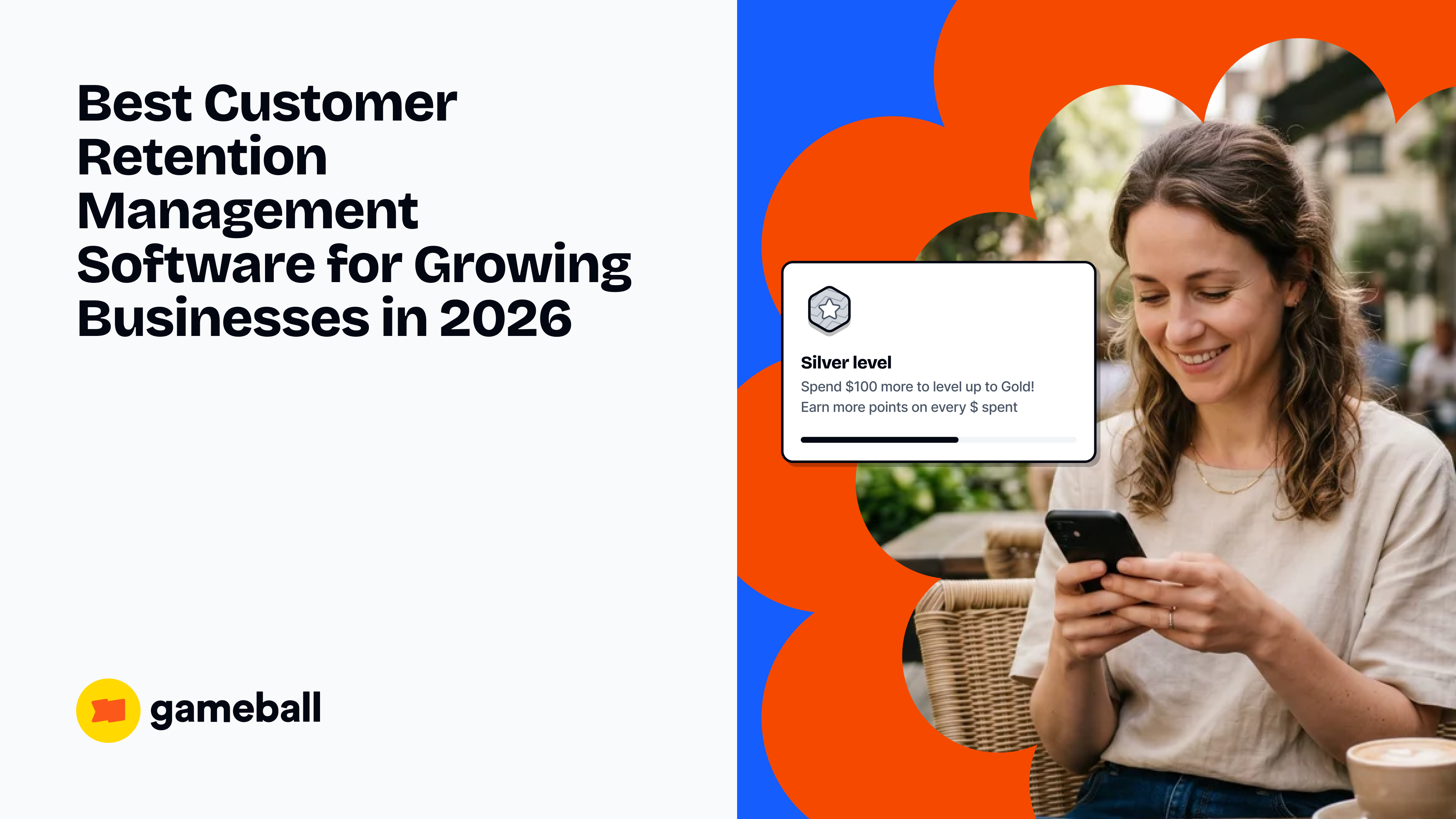
What Is Customer Retention Management Software
Customer retention management software helps businesses minimize churn and maximize customer lifetime value by tracking account health, surfacing risks, and automating post-sale engagement. Instead of focusing on acquiring new buyers, this type of software shifts attention to keeping existing customers satisfied and loyal.
You can think of it as the operational layer for everything that happens after someone becomes a customer. The software pulls data from multiple touchpoints, triggers personalized messages based on behavior, and shows your team which accounts are thriving versus which ones are slipping away.
Unlike general-purpose CRMs that manage sales pipelines, retention software zeroes in on the post-purchase relationship. It answers questions like: Who's at risk of leaving? What actions drive repeat purchases? How do we turn one-time buyers into loyal advocates?
Why Customer Retention Software Matters for Growing Businesses
Acquiring a new customer costs five to seven times more than retaining an existing one, according to Bain & Company. For growing businesses operating on tight margins, that math matters a lot.
Retention directly impacts customer lifetime value (CLV), which is the total revenue a customer generates over their relationship with your brand. Even a small improvement in retention rate can compound into significant revenue gains over time.
Growing businesses face unique challenges here. You're often working with fragmented data across channels, limited headcount, and the pressure to scale customer relationships without adding proportional overhead. Retention software addresses these gaps by automating engagement and surfacing insights that would otherwise require manual analysis.
- Reduced churn: Identify at-risk customers before they leave
- Higher CLV: Increase repeat purchases and average order value over time
- Operational efficiency: Automate engagement instead of manual outreach
- Unified customer view: Consolidate data across channels for smarter decisions
Key Features to Look for in Customer Retention Management Software
Not all retention platforms are built the same. The right feature set depends on your business model, but certain capabilities consistently separate effective tools from basic ones.
Loyalty and Rewards Engine
A loyalty engine lets you reward customers for specific behaviors, not just transactions. Points-based systems, cashback, and tiered VIP programs create ongoing incentives to return.
The most flexible platforms allow you to configure earning rules for any action: purchases, reviews, social shares, or even profile completion. This moves beyond "spend more, earn more" into behavior-based engagement that builds habit.
Gamification and Behavioral Engagement
Gamification adds game-like elements to create habit loops that drive repeat engagement. Challenges, badges, streaks, and progress bars transform static loyalty programs into interactive experiences.
When customers see progress toward a goal or unlock an achievement, they're more likely to return. This psychological pull goes beyond discounts and taps into intrinsic motivation.
Referral Program Tools
Referrals turn satisfied customers into an acquisition channel. Effective referral tools provide shareable links, dual-sided rewards for both sender and receiver, and milestone bonuses for high-volume referrers.
While referrals technically drive acquisition, they're also a retention mechanism. Customers who refer others tend to be more engaged and have higher lifetime value themselves.
Marketing Automation and Lifecycle Messaging
Automated workflows trigger communications based on customer behavior: abandoned carts, inactivity periods, milestone achievements, or expiring rewards. These messages reach customers at the right moment without manual intervention.
The best platforms support multiple channels, including email, push notifications, and in-app messages. They also allow you to personalize content based on segments or individual attributes.
Customer Segmentation and Personalization
RFM segmentation groups customers by recency, frequency, and monetary value. This enables targeted offers: win-back campaigns for lapsed buyers, VIP perks for top spenders, or onboarding sequences for new customers.
Tier-based and behavior-based segmentation takes this further, letting you create dynamic audiences that update automatically as customer behavior changes.
Omnichannel Support Across Web, App, and POS
For brands with both digital and physical presence, omnichannel support is essential. Customers expect a unified experience whether they're shopping online, in your app, or at a physical store.
Loyalty points earned in-store can be redeemed online, and vice versa. POS integration ensures your retention strategy extends beyond digital channels.
Retention Analytics and CLV Reporting
You can't improve what you don't measure. Retention dashboards surface key metrics: churn rate, retention rate, CLV, repeat purchase rate, and program engagement.
The most useful platforms connect these metrics to specific campaigns and actions, so you can see which initiatives actually move the needle.
Security, Compliance, and Data Residency
Enterprise buyers and regulated industries require GDPR, CCPA, and PDPL compliance. Look for encryption, access controls, and data residency options that match your geographic footprint.
Types of Customer Retention Management Software
Retention software spans multiple categories, each tailored to different business models and operational needs.
Loyalty and Rewards Platforms
Loyalty platforms incentivize repeat purchases through VIP programs, points, and rewards. They're ideal for ecommerce and retail brands where purchase frequency directly impacts revenue.
Customer Relationship Management Tools
CRMs track customer interactions and pipeline data. Platforms like HubSpot and Salesforce often include marketing automation features, making them all-in-one solutions for sales-driven businesses.
Marketing Automation Software
Automated email sequences, triggered campaigns, and omnichannel messaging reduce manual work while maintaining personalized communication at scale.
Customer Support and Helpdesk Software
Quick issue resolution prevents frustration-driven churn. Ticketing systems, live chat, and multi-channel support ensure no customer request falls through the cracks.
Behavioral Analytics and Product Experience Tools
Behavioral analytics tools track user behavior within products to identify churn signals. They're particularly valuable for SaaS and subscription businesses where product usage predicts retention.
Customer Feedback and Survey Tools
NPS (Net Promoter Score) surveys and feedback loops surface dissatisfaction before customers leave. They provide early warning signals that quantitative data might miss.
Best Customer Retention Management Software for Growing Businesses
Here's a curated list of platforms suited for mid-market and growing brands, each with distinct strengths.
1. Gameball
Gameball is an all-in-one loyalty, gamification, referrals, and promotions platform that embeds directly into your existing app, website, and POS. No separate download required. It rewards behavior, not just transactions, with configurable points engines, VIP tiers, challenges, and automated lifecycle messaging.
Best for: Mid-market to enterprise retail, ecommerce, and on-demand apps needing omnichannel support and enterprise-grade compliance.
2. Smile.io
Smile.io is a popular loyalty and rewards platform, particularly among Shopify merchants. It offers points, VIP tiers, and referral programs with a straightforward setup.
Best for: Shopify-focused ecommerce brands. Limitation: Less flexible for complex omnichannel needs.
3. LoyaltyLion
LoyaltyLion provides ecommerce loyalty programs with points and tiers, integrating with major ecommerce platforms.
Best for: E-commerce brands on Shopify, BigCommerce, or Magento. Limitation: More template-driven than fully customizable.
4. Yotpo
Yotpo combines reviews, loyalty, and SMS marketing in one platform. It's useful for brands wanting to consolidate multiple functions.
Best for: Brands wanting reviews and loyalty together. Limitation: Multiple products can add complexity.
How to Choose the Right Customer Retention Software
Step 1. Define Your Retention Goals and Metrics
Start by identifying what you want to improve: churn rate, repeat purchase rate, CLV, or NPS. Set baseline metrics before evaluating tools so you can measure impact later.
Step 2. Audit Your Tech Stack and Integrations
List your current tools, including your ecommerce platform, CRM, POS, and CDP. Check API availability and native integrations to avoid siloed data that undermines your retention efforts.
Step 3. Match Features to Your Customer Journey
Map your retention touchpoints: post-purchase, re-engagement, and win-back. Identify which features address each stage and prioritize accordingly.
Step 4. Evaluate Scalability, Security, and Compliance
Consider your growth trajectory. Enterprise-grade hosting, data residency options, and GDPR/CCPA/PDPL compliance matter for regulated industries or international expansion.
Step 5. Run a Pilot and Measure Impact on CLV
Start with a focused use case. Track key metrics during the pilot period and compare against your baseline to validate ROI before full rollout.
How to Measure ROI From Customer Retention Software
After implementation, track specific metrics to demonstrate value:
- Retention rate change: Compare before and after implementation
- Customer lifetime value: Track increase in average revenue per customer
- Repeat purchase rate: Measure frequency of return purchases
- Churn rate reduction: Monitor a decrease in customer attrition
- Program engagement: Track loyalty program participation and redemption rates
- Cost per retained customer: Calculate efficiency vs. acquisition costs
Connecting retention data to revenue reporting helps secure executive buy-in for continued investment.
Turn Retention Into a Growth Engine With Gameball
Gameball unifies loyalty, gamification, referrals, and promotions in one platform that embeds into your existing channels. Rather than rewarding transactions alone, it rewards the behaviors that build habit and drive long-term value.
With ready SDKs, no-code configuration, and enterprise-grade security, teams can launch quickly and iterate without engineering bottlenecks. The platform supports omnichannel experiences across web, mobile, and POS, delivering one consistent experience wherever customers engage.
Book a demo to see how Gameball can help you retain more customers and grow CLV.
Frequently Asked Questions About Customer Retention Management Software
Is customer retention management software the same as a CRM?
No. CRMs focus on managing customer relationships and sales pipelines, while retention software specifically targets reducing churn through loyalty programs, automated engagement, and behavioral triggers. Some CRMs include retention features, but dedicated retention platforms offer deeper functionality for post-purchase engagement.
Is there free customer retention software available?
Some platforms, like HubSpot CRM, offer free tiers with basic retention features. However, advanced loyalty, gamification, and automation capabilities typically require paid plans. Evaluate free options against your specific retention goals before committing.
How long does it take to implement customer retention software?
Implementation timelines vary from a few days for plug-and-play solutions with ready SDKs to several weeks for enterprise deployments requiring custom integrations. Platforms with pre-built widgets and no-code configuration typically launch faster.
What is the most popular customer retention software for e-commerce?
Popular options include loyalty platforms like Smile.io, Yotpo, and Gameball, as well as all-in-one solutions like HubSpot that combine CRM with marketing automation. The best choice depends on whether you want basic points programs or advanced gamification and omnichannel support.
How does loyalty software fit into a customer retention strategy?
Loyalty software is one category within customer retention management that incentivizes repeat purchases through points, tiers, and rewards. It works alongside other retention tools like marketing automation and customer support to create a comprehensive strategy.
.svg)
.svg)
.svg)

Ready to level up your game?
Create your first campaign and start seeing results in 30 days.
Ready to grow?
Get in touch with our sales team today.
The loyalty vendor checklist your CTO
will thank you for
Discover engineering challenges, essentials, and more from global brands.

Gameball Staff
Stay ahead on retention
Subscribe to our newsletter and get all the latest updates as we post.

Ready to level up your game?
Create your first campaign and start seeing results in 30 days.
Read related articles

%2520(1)%2520(1)%2520(1)%2520(2)%2520(1).avif)

Ready to level up your customer loyalty?
Level up your customer loyalty!


.avif)
.avif)
.avif)
.avif)