%207.svg)

.svg)

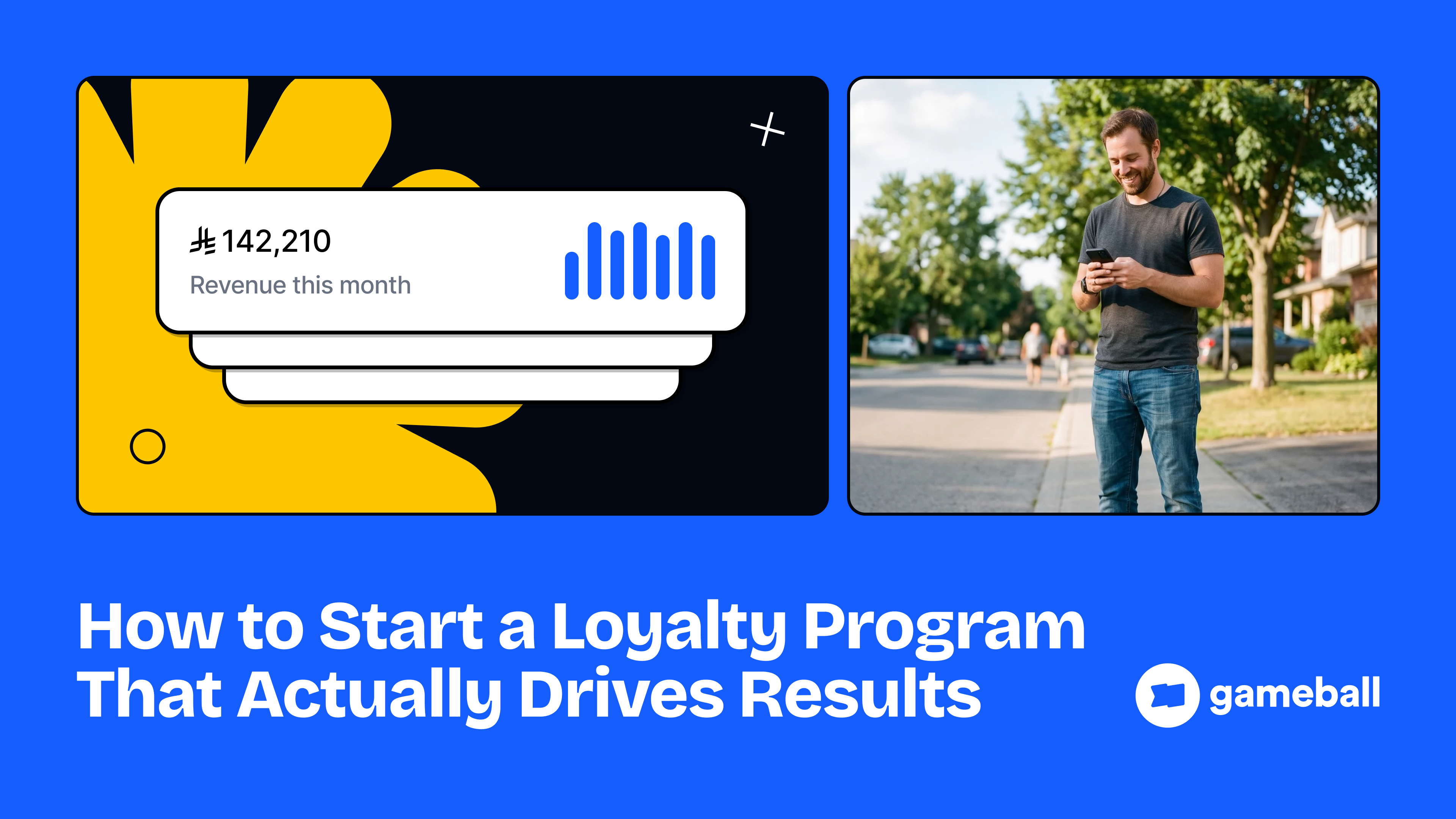
Most loyalty programs fail quietly. Customers sign up, earn a few points, and never think about the program again. The problem usually isn't the rewards; it's the structure, the timing, or the friction that kills engagement before it starts.
A loyalty program that actually drives results requires more than a points system bolted onto checkout. It requires clear goals, the right program type for your business model, and technology that works across every channel where customers interact with your brand. This guide walks through the full process, from choosing a program structure to measuring ROI, so you can launch with confidence and iterate based on real data.
What is a customer loyalty program?
A customer loyalty program is a structured system that rewards customers for repeat purchases or specific behaviors. The basic mechanic works like this: customers earn something (points, cashback, status) and then redeem it for rewards (discounts, free products, exclusive access).
Modern programs have moved well beyond paper punch cards. Today's loyalty programs use digital tracking, personalization, and omnichannel experiences that follow customers across websites, mobile apps, and physical stores.
Benefits of starting a loyalty program
Why invest in a loyalty program in the first place? The payoff goes beyond "making customers happy."
Higher customer retention
Loyalty programs give customers a reason to come back. When someone has accumulated points or reached a certain tier, leaving means losing that progress. That creates a switching cost. And since retaining existing customers costs 5 to 25 times less than acquiring new ones, retention becomes a powerful lever for profitability.
Increased average order value
Point multipliers, tier thresholds, and spend-based rewards encourage customers to add more to their cart. If someone is 50 points away from a reward, they're more likely to toss in that extra item to hit the threshold.
Lower customer acquisition costs
Referral programs turn loyal customers into an acquisition channel. Word-of-mouth from satisfied members reduces reliance on expensive paid advertising.
Richer first-party customer data
Loyalty programs capture purchase history, preferences, and behavior across channels. As third-party cookies disappear, first-party data becomes increasingly valuable for personalization and segmentation.
Stronger brand differentiation
A well-designed loyalty experience, especially one that's gamified or personalized, sets your brand apart from competitors running generic programs.
Types of loyalty programs
Choosing the right program structure is one of the first decisions you'll face. Each type works better for certain business models.
Points-based programs
Customers earn points per dollar spent or per action, then redeem those points for discounts or rewards. This is the most common type and works well for frequent, low-ticket purchases like retail and food service.
Tiered and VIP programs
Customers unlock higher status levels with better perks as they spend more. This model creates aspirational loyalty; customers want to reach the next tier. It works particularly well for high-ticket categories like fashion, hospitality, and airlines.
Cashback programs
A percentage of spend returns to the customer as store credit or wallet balance. The simplicity appeals to value-conscious customers who prefer straightforward value over complex point systems.
Paid membership programs
Customers pay a fee for exclusive benefits like free shipping, early access, or member pricing. Amazon Prime is the classic example. This model works when the perceived benefits clearly outweigh the cost.
Referral programs
Customers earn rewards for inviting friends who convert. This turns loyal customers into an acquisition channel, reducing CAC while bringing in customers who already have a trusted recommendation.
Gamified loyalty programs
Gamified programs incorporate game mechanics, challenges, badges, streaks, leaderboards, and spin-to-win to drive engagement beyond transactions. Rather than just rewarding purchases, gamified programs reward behaviors and build habits.
How much does it cost to start a loyalty program
Cost varies significantly based on complexity, scale, and whether you build custom or use existing platforms.
Strategy and program design
Some brands hire consultants or agencies for program architecture and rule design. Others handle this in-house. Many platforms include design support as part of onboarding.
Loyalty software and technology
Software costs range from free plug-and-play options for small businesses to enterprise-grade platforms with custom pricing. Factors that influence cost include integration complexity (API, SDK, POS) and omnichannel requirements. All-in-one platforms that combine loyalty, gamification, referrals, and promotions often cost less than stitching together multiple tools.
Rewards and points liability
Outstanding points represent a financial liability on your books. Smart programs use expiration rules and redemption thresholds to manage this exposure.
Ongoing management and promotion
Budget for marketing the program, customer support, and ongoing optimization. Automation reduces manual workload over time.
How to start a loyalty program in 7 steps
Here's where strategy becomes action.
1. Define your loyalty program goals and KPIs
Start with specific objectives. Are you trying to increase visit frequency? Boost average order value? Reduce churn? Grow referrals? Your goals shape every decision that follows.
Key metrics to track:
- Retention rate: Percentage of customers who return within a set period
- Repeat purchase rate: Frequency of orders per customer
- Customer lifetime value (CLV): Total revenue expected from a customer relationship
- Redemption rate: Percentage of earned rewards actually redeemed
2. Understand your customer segments
Different customers respond to different incentives. Use purchase history, RFM segmentation (recency, frequency, monetary value), and surveys to understand what motivates your best customers. High-value customers might care most about exclusive access, while price-sensitive segments respond better to discounts.
3. Choose the right loyalty program type
Match your program type to your business model, purchase frequency, and customer expectations. A coffee shop with daily visitors requires a different structure than a furniture retailer with annual purchases. Hybrid approaches are common; many successful programs combine points with tiers and gamification elements.
4. Design earning rules and rewards
Three principles guide effective reward design:
- Value: Offer meaningful rewards, discounts, free products, exclusive access, or cashback
- Speed: Ensure customers can earn their first reward quickly to build a habit
- Simplicity: Avoid complicated conversion rates and keep rules clear
5. Select a loyalty program platform
Technology is critical for automation, tracking, and omnichannel consistency. When evaluating platforms, consider integration with existing POS, e-commerce, and mobile apps; omnichannel support across web, app, and in-store; configurability without developer dependency; built-in analytics; and scalability with compliance support (GDPR, CCPA).
6. Launch and promote the program
Make sign-up frictionless. Prompt customers at checkout, enable QR code enrollment, and request minimal information upfront. The easier it is to join, the higher your enrollment rate.
7. Measure, optimize, and iterate
Launch is not the finish line. Track the KPIs defined in Step 1, run A/B tests on rewards and communications, and iterate based on data.
Best practices for a loyalty program that drives results
The difference between a program that exists and one that drives measurable results often comes down to execution details.
Reward behaviors, not just transactions
Modern programs reward actions like reviews, referrals, app logins, social shares, and profile completion, not only purchases. This builds engagement between transactions and creates habits that keep customers connected to your brand.
Personalize rewards by customer segment
Use customer data to offer personalized rewards. Birthday rewards, segment-based offers, and personalized challenges outperform one-size-fits-all approaches.
Make earning and redemption feel fast
Quick wins build a habit. Set achievable first milestones and offer instant gratification options like small discounts or free shipping.
Protect margins with clear rules and caps
Use redemption limits, points expiry, validation holds, and refund auto-adjustment to prevent fraud and abuse. Stacking rules and exclusions protect profitability while still delivering value.
Run an omnichannel experience across web, app, and POS
Customers expect a consistent loyalty experience whether shopping online, in-app, or in-store. Unified customer profiles and real-time point sync across channels prevent frustration.
How to use gamification to boost loyalty program engagement
Gamification adds game mechanics to loyalty programs to increase participation and frequency. Common mechanics include:
- Challenges and missions: Task-based rewards tied to specific actions
- Streaks: Consecutive activity rewards that build a habit
- Badges and achievements: Recognition for milestones
- Progress bars: Visual motivation toward the next reward
- In-app games: Spin the wheel, trivia, and other interactive rewards
Gamification turns loyalty into a daily experience rather than a passive points balance.
How to promote and launch your loyalty program
Even great programs fail if customers don't know they exist.
Announce on owned channels
Use website banners, homepage callouts, checkout page prompts, social media posts, and blog announcements.
Trigger in-app and on-site prompts
Pop-ups, slide-ins, and embedded widgets prompt sign-up at high-intent moments, post-purchase, account creation, or product browsing.
Use email and push lifecycle campaigns
Automated welcome sequences, milestone reminders, expiring-points alerts, and re-engagement campaigns keep the program top of mind.
Activate staff and POS touchpoints
For omnichannel brands, train staff to mention the program at checkout, display signage in-store, and enable enrollment via phone number or digital card at POS.
Layer in a referral loop
Existing members can drive enrollment by sharing referral links with incentives for both sender and receiver.
How to measure the success of a loyalty program
Measurement connects your program to business outcomes.
Customer retention rate
The percentage of customers who remain active over a period. Calculate by dividing customers at the end of the period (minus new customers) by customers at the start of the period.
Repeat purchase rate
How often customers return to purchase is a direct indicator of whether your program is working.
Customer lifetime value
Total revenue expected from a customer relationship. Successful programs show a lift in CLV over time.
Redemption rate
Percentage of earned points or rewards actually redeemed. Too low may indicate disengagement; too high may signal margin risk.
Net Promoter Score
Measures how likely members are to recommend your brand, a proxy for program satisfaction.
Program ROI
Compare program costs against incremental revenue from loyalty members.
Common loyalty program mistakes to avoid
- Overcomplicating earning rules: Confuses customers and reduces participation
- Making rewards too hard to reach: Customers lose interest before earning their first reward
- Ignoring mobile and omnichannel: A fragmented experience frustrates customers
- Failing to promote the program: Even great programs fail if customers don't know they exist
- Not using data to personalize: Generic programs underperform
- Letting points liability grow unchecked: Creates financial risk without expiration rules
- Treating launch as the finish line: Programs require ongoing optimization
Build a loyalty program that actually drives results with Gameball
Gameball brings loyalty, gamification, referrals, and promotions into one platform, embedded directly into your existing web, app, and POS experiences.
What sets Gameball apart:
- Gamification built into the core: Challenges, badges, streaks, and games that drive engagement beyond transactions
- Behavior-based rewards: Reward actions, not just purchases
- Omnichannel consistency: One experience across web, app, and in-store
- No-code configurability: Marketing teams can build and iterate without engineering
- Enterprise-grade infrastructure: Compliance support for GDPR, CCPA, and PDPL
Book a demo to see how Gameball helps brands launch loyalty programs that drive measurable retention, engagement, and revenue.
Frequently asked questions about starting a loyalty program
How do you create your own loyalty program from scratch?
Start by defining goals and customer segments, then choose a program type and design earning rules. Select a loyalty platform that integrates with your existing systems, launch with a promotion plan, and iterate based on performance data.
What are the 3 R's of loyalty?
The 3 R's of loyalty are Rewards, Recognition, and Relevance: what customers earn, how their status or achievements are acknowledged, and how personalized the experience feels.
What are the 4 C's of customer loyalty?
The 4 C's of customer loyalty are Consistency, Communication, Convenience, and Customization, reliable experience, ongoing engagement, easy earning and redemption, and personalized rewards and offers.
How long does it take to launch a customer loyalty program?
Launch timelines range from a few days for plug-and-play solutions to several weeks for complex, custom-built enterprise programs. Using a platform with ready SDKs and configurable rules significantly speeds up time to launch.
Do small businesses need a loyalty program?
Loyalty programs help small businesses compete by increasing repeat purchases and reducing reliance on costly acquisition channels. Even simple options like punch cards or basic points systems can meaningfully improve customer retention.
.svg)
.svg)
.svg)

Ready to level up your game?
Create your first campaign and start seeing results in 30 days.
Ready to grow?
Get in touch with our sales team today.
The loyalty vendor checklist your CTO
will thank you for
Discover engineering challenges, essentials, and more from global brands.

Gameball Staff
Stay ahead on retention
Subscribe to our newsletter and get all the latest updates as we post.

Ready to level up your game?
Create your first campaign and start seeing results in 30 days.
Read related articles


.avif)
Ready to level up your customer loyalty?
Level up your customer loyalty!


.avif)
.avif)
.avif)
.avif)